How to Tell If a Nootropic Is Actually Working: An 8-Week Self-Trial Protocol
Quick Answer: How Do You Know If a Brain Supplement Is Working?
You measure something before you start — five days of baseline data, one metric you commit to in advance, and a verdict date eight weeks out — because without a baseline every judgement you make is a memory of how you felt, not a measurement. Most people do the opposite: they start the capsule, feel good on day one, and then spend two months arguing with themselves. The protocol below fixes that with four things almost nobody bothers with: a defined baseline, a separate stimulant-only phase, a decision rule written down before the first capsule, and an honest willingness to conclude "no".
- Baseline: 5 days of data before your first capsule. Without it there is nothing to compare against.
- Verdict date: day 56. Judging at day 10 judges only the caffeine.
- Most likely honest outcome: inconclusive — and that means stop.
Why your impression of a supplement is not evidence
Here is the uncomfortable part. When you ask yourself at week six whether the capsule is helping, you are not comparing today against a record of six weeks ago. You are comparing today against your memory of six weeks ago — and that memory was formed by the same brain you are trying to evaluate, on a day you probably chose to start because you were feeling unusually foggy. Every step of that comparison is contaminated.
This is not a failure of willpower or attention. It is the reason clinical trials exist in the form they do: baselines, control groups, blinding, pre-registered outcomes. You cannot replicate all of that alone in your kitchen. But you can replicate the two parts that do most of the work — measuring before you start, and deciding in advance what would count as success. Everything below is built on those two ideas.
The 8-week self-trial protocol
Print this, or copy the four columns into a note on your phone. The structure matters more than the specific metric you choose.
| Week | What you do | What you record | Decision point |
|---|---|---|---|
| Days 1–5 (baseline) | No capsules. Live normally. Do not change coffee, sleep or exercise. | Your three daily items at the same clock time each day. Note total caffeine. | Write down your baseline average and your pre-committed success threshold. Seal it. |
| Weeks 1–2 (stimulant phase) | Start the capsule. Same time every morning, with food. | Same three items. Add a note on jitters and sleep onset. | None. Anything you feel here is caffeine and expectation. Do not judge the product. |
| Weeks 3–5 (assessment phase) | Continue daily. Do not change dose, coffee intake or bedtime. | Same three items, every day, no gaps. | Mid-point check for adherence only. If you have missed more than 4 days, restart the clock. |
| Weeks 6–8 (assessment phase) | Continue daily. Resist the urge to add a second supplement. | Same three items. Note any life events that would move the numbers on their own. | None until day 56. |
| Day 56 (verdict) | Stop and calculate. | Average weeks 6–8 against your days 1–5 baseline. | Compare to the sealed threshold. Above it, continue. Below or unclear, stop. |
| Optional: days 57–70 (washout) | Stop the capsule entirely. | Same three items. | If nothing changes when you stop, that is your strongest single piece of evidence. |
Two design choices in that table are doing the heavy lifting. The first is the stimulant phase: weeks one and two are quarantined from the verdict because a caffeinated formula produces a real, immediate effect that has nothing to do with the slower ingredients. The second is the washout. Stopping and watching what happens is closer to a controlled experiment than anything else available to you, and it is the step people skip most often.
What to measure, and what not to bother with
The instinct is to reach for a cognitive test. That instinct is mostly wrong, and it is worth understanding why before you spend an evening on it.
| Instrument | What it is | Good for | Not good for |
|---|---|---|---|
| SAGE (Self-Administered Gerocognitive Exam, Ohio State University Wexner Medical Center) | Free 12-question pen-and-paper test, 10–15 minutes, four interchangeable forms | Flagging possible cognitive impairment so you can take it to a clinician | Detecting small supplement effects in a healthy adult. It was not built for that. |
| XpressO by MoCA | Free 7-minute self-test on phone, tablet or browser; placement, logic and memory trials | A quick screening signal that prompts a clinical conversation | Repeated week-by-week tracking. Explicitly not a diagnostic tool. |
| Your own 3-item daily log | Afternoon focus 1–10 at a fixed time; count of missed names or details; minutes to fall asleep | Everything in this protocol. Cheap, daily, sensitive to change, hard to game once the threshold is sealed. | Anything clinical. It is a personal record, not an assessment. |
The evidence on self-testing apps is worth knowing before you trust one. In a 2020 systematic search and evaluation published in the Journal of Medical Internet Research, Charalambous and colleagues screened 3,057 app- and web-based cognitive self-testing tools and included 25 in their review. Only 7 of those 25 reported any psychometric data at all, and just one reported the full set — norms, reliability, validity and sensitivity or specificity. That is the state of the market. A tool with no published validation cannot tell you whether a 4% change in your score is a real change or noise.
So: use the boring daily log. It sounds less scientific than an app with a graph, and it is more reliable, because you control when and how it is recorded.
Four reasons your result will lie to you
Every one of these will push your self-trial towards a false positive. Naming them is the only defence.
1. The placebo response
Expectation genuinely changes how you perceive your own performance. Research on placebo and nocebo effects in cognitive enhancement — including a 2019 review in Frontiers in Psychiatry on how expectation shapes perception — finds that positive expectancy reliably improves perceived cognitive performance, even where objective task performance does not move. You bought the product because you expected it to work. That expectation is now part of your measurement instrument.
2. Practice effects
If you take the same cognitive test repeatedly, your score rises whether or not anything about your brain has changed. Hausknecht and colleagues, in a meta-analysis of 107 samples covering 134,436 participants published in the Journal of Applied Psychology in 2007, found an adjusted retest effect of d = 0.26 — and larger still when the identical form was reused rather than a parallel version. Retest your way to an improved score and you have measured familiarity, not cognition.
3. Regression to the mean
You started the supplement because you were having a bad stretch. Bad stretches end. Krogsbøll, Hróbjartsson and Gøtzsche pooled 37 three-armed trials that included a genuine no-treatment arm and reported a standardised mean improvement of −0.24 (95% CI −0.36 to −0.12) in people receiving nothing at all. People measured at their worst tend to improve without any intervention, and whatever they happened to start that week gets the credit.
4. Stimulant masking
This is the one specific to caffeinated formulas and it is the most misleading of the four. Caffeine works in 30 to 60 minutes and is unmistakable. It also builds tolerance over a couple of weeks. So the arc most people experience — a convincing first week, a flat sixth week — is fully explained by caffeine pharmacology plus fading novelty, before any slower ingredient is considered at all. If you want to understand how much caffeine you are actually taking, our breakdown of green coffee bean caffeine content and chlorogenic acid covers how to read it off a label.
Control the confounders you can. Sleep is the single largest influence on next-day focus and on memory consolidation, and it moves far more than any capsule will. If you change your bedtime during the trial, you have changed the experiment. The same goes for starting a new exercise routine, a new job, or a second supplement. Hold everything else steady — see our piece on sleep and memory consolidation for why this one matters most.
Set the decision rule before you take the first capsule
This is the step that separates a self-trial from a hopeful diary, and it takes five minutes.
At the end of your baseline week, write down one sentence in this form: "I will continue taking this only if my average afternoon focus score across weeks 6 to 8 is at least 1.5 points above my baseline average of X." Then put it somewhere you will not edit it. A threshold chosen at the end of a trial always mysteriously matches the result you got; a threshold chosen at the start does not.
Choose the size of the difference honestly. If a half-point on a ten-point scale is your bar, you will clear it by chance. Something in the range of one to two points on a ten-point scale, sustained across three weeks, is a difference you would actually care about in daily life. If a supplement cannot produce a difference you would care about, it does not matter whether it produced a difference at all.
Running the protocol on a specific formula?
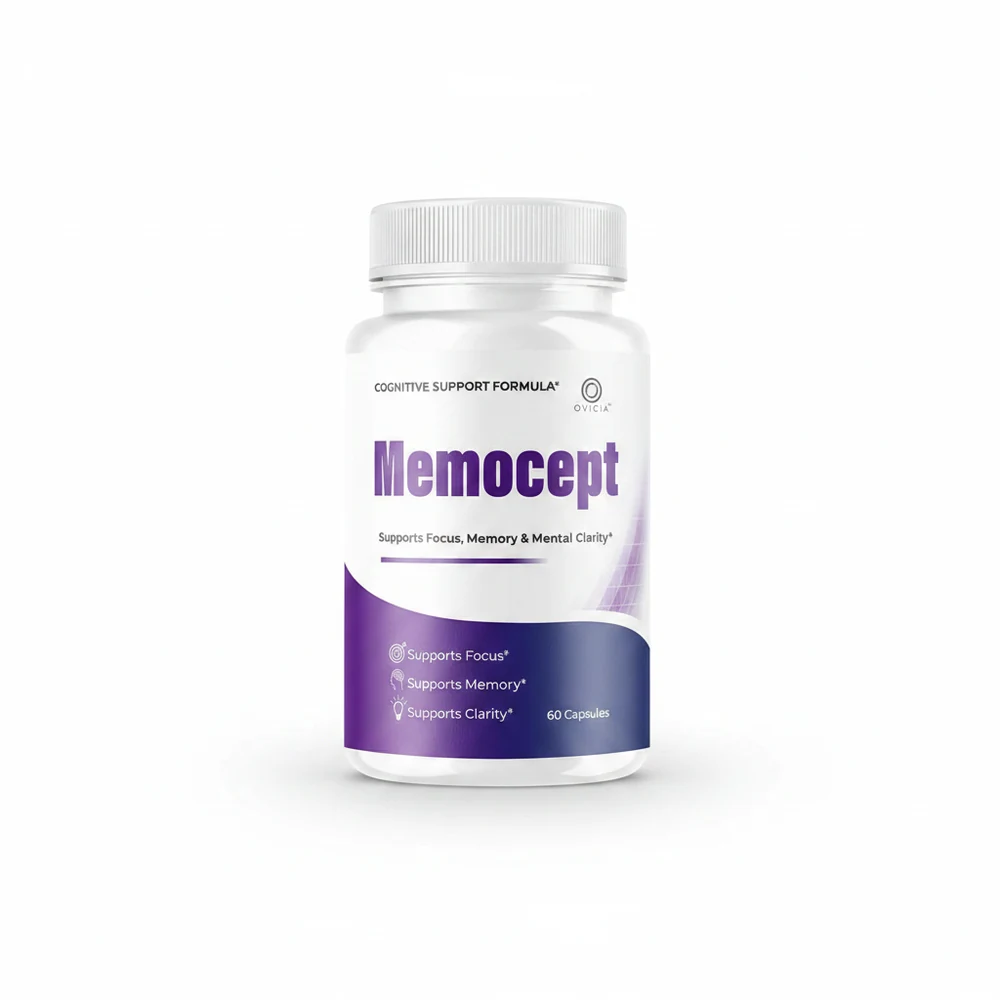
Memocept is a once-daily capsule with five named actives and no proprietary blend, so you can see exactly what you are testing. Check the ingredient panel and current availability at the official store.
Order NowA note on calendars, capsules and refund windows
Some arithmetic worth doing before you start, purely as planning information.
At one capsule a day, a 30-capsule bottle is exactly 30 days. An 8-week protocol is 56 days. Those two numbers do not match, which means a single bottle physically cannot cover the assessment window described above — you would run out around day 30, in the middle of weeks three to five. If you intend to run a full trial, work out the supply before day one rather than discovering the gap mid-protocol, because a gap in dosing invalidates the very thing you are measuring.
Separately: many supplements in this category, including the Memocept formula, are sold with a 60-day money-back guarantee handled by the seller. Sixty days and a 56-day protocol happen to be close to the same length, which is convenient timing if you are the sort of person who wants a verdict before a refund window closes. Check the current terms with the seller directly — guarantee periods and conditions are set by the manufacturer, not by this site.
What this protocol cannot tell you
Be clear-eyed about the ceiling here, because overselling a method is as dishonest as overselling a product.
It is not blinded. You know you are taking the capsule, so the placebo response is inside your result and cannot be subtracted out. A washout phase helps but does not eliminate it.
There is no control arm. You cannot know what these eight weeks would have looked like without the supplement. Regression to the mean and seasonal changes in mood, workload and daylight all run in the background.
n = 1 is a small number. Even a clean result tells you about you, in this period, at this dose. It does not generalise, and it is not evidence about the product for anyone else.
Small effects are undetectable this way. The published effects for most cognitive-support botanicals in healthy adults are modest. A modest effect inside noisy daily self-ratings will usually not surface — which is precisely why an inconclusive result is the expected outcome, not a surprise. Our review of the Bacopa monnieri memory evidence is a good illustration of what "statistically real but small" looks like in practice.
And it cannot diagnose anything. A daily focus score is a personal record. It says nothing clinical.
When to stop self-experimenting. This protocol is for everyday brain fog and focus in otherwise healthy adults. If your memory or thinking is persistently worse, getting worse over time, interfering with work or daily tasks, or accompanied by changes in mood, speech, balance or personality, that is a reason to see a clinician — not a reason to run an eight-week supplement trial. At-home cognitive tests cannot diagnose any condition. Cognitive symptoms have many medical causes, including several that are treatable, and delay is the real risk. This article is general information, not medical advice, and individual results vary.
Frequently asked questions
How long should I take a nootropic before deciding if it works?
Eight weeks of consistent daily use, after five days of baseline measurement taken before your first capsule. Stimulant ingredients such as caffeine declare themselves in under an hour, so anything you notice in week one is almost certainly the stimulant. The slower memory-related botanicals were studied over 8 to 12 weeks in their trials, so a verdict taken at day 10 is a verdict on caffeine and nothing else.
What should I actually measure?
One thing, chosen before you start, and recorded the same way every day. A three-item daily log works well: afternoon focus rated 1 to 10 at a fixed time, the number of times you lost a name or a detail that day, and how long it took you to fall asleep. Pick one of those three as your primary metric and treat the other two as context. One committed metric beats five vague ones, because it removes your freedom to change the goalposts at week eight.
Can an at-home cognitive test tell me if a supplement is working?
Not really, and it is important to understand why. Tools such as the Self-Administered Gerocognitive Exam from Ohio State and XpressO by MoCA are screening instruments designed to flag possible cognitive impairment for clinical follow-up. They are not sensitive enough to detect the small changes a supplement might produce in a healthy adult, and repeated testing inflates scores through practice alone. A 2020 JMIR systematic evaluation found that of 25 self-testing tools reviewed, only 7 reported any psychometric data at all. Use them as a health signal, not as a supplement scoreboard.
Why do I feel great on day one and nothing by week six?
Two things are usually happening at once. The first is caffeine, which produces a genuine same-day lift and then loses its edge as tolerance develops over a couple of weeks. The second is the placebo response, which is strongest at the start when expectation is highest. Together they create a convincing opening week that has nothing to do with the ingredients you actually bought the product for. This is exactly why the protocol above asks you to record a stimulant-only phase separately.
What if the result is inconclusive?
Then the honest answer is that it did not work well enough for you to detect, and the reasonable decision is to stop. Inconclusive is the most common outcome of a single-arm self-trial in a healthy adult, and it is not a failure of the protocol. A supplement that needs eight weeks of careful record-keeping and still cannot beat your baseline is not delivering something you would have noticed anyway. Stopping is a legitimate result, and it is cheaper than continuing out of hope.
Scientific references
- Charalambous A.P., Pye A., Yeung W.K., Leroi I., Neil M., Thodi C., Dawes P. — Tools for app- and web-based self-testing of cognitive impairment: systematic search and evaluation, Journal of Medical Internet Research 2020;22(1):e14551
- Hausknecht J.P. et al. — Retesting in selection: a meta-analysis of coaching and practice effects for tests of cognitive ability, Journal of Applied Psychology 2007;92(2):373–385
- Krogsbøll L.T., Hróbjartsson A., Gøtzsche P.C. — Spontaneous improvement in randomised clinical trials: meta-analysis of three-armed trials comparing no treatment, placebo and active intervention, BMC Medical Research Methodology 2009;9:1
- Placebo- and nocebo-effects in cognitive neuroenhancement: when expectation shapes perception, Frontiers in Psychiatry 2019;10:498
- Ohio State University Wexner Medical Center — SAGE (Self-Administered Gerocognitive Exam)
- MoCA Cognition — XpressO self-administered digital cognitive test
- NIH Office of Dietary Supplements — Dietary supplement fact sheets
Know what you are testing before you test it
Memocept lists all five actives by name — Bacopa monnieri, Huperzine-A, Rhodiola rosea, L-Tyrosine and caffeine from green coffee — with no proprietary blend. See the panel, the 60-day guarantee terms and current availability at the official store.
Order Now