Bacopa Monnieri and Memory: What the Clinical Evidence Actually Shows
Quick Answer: Does Bacopa Monnieri Improve Memory?
Yes, but slowly. Bacopa monnieri has genuine, replicated evidence for improving certain kinds of memory — chiefly the retention and free recall of newly learned information — but the effect is modest and builds over roughly 12 weeks of daily use, not overnight. Two systematic reviews of randomised controlled trials found standardised Bacopa extract improved memory recall, and several 12-week trials in older and healthy adults reported better word recall and memory acquisition. It is not a quick fix, not a smart drug, and not a treatment for dementia or any cognitive disease — it is slow-acting, studied support for healthy memory.
- Strongest finding: better retention and delayed recall of new information after chronic use.
- Dose that matters: around 300 mg/day of extract standardised for bacosides.
- Key caveat: allow ~12 weeks — it is support, not a same-day focus boost.

What Bacopa monnieri actually is
Bacopa monnieri — known in Ayurvedic tradition as Brahmi — is a small creeping herb that has been used for centuries as a memory tonic. Its cognitive activity is attributed mainly to a group of compounds called bacosides, triterpenoid saponins that are the reason serious products are standardised to a bacoside percentage rather than sold as plain leaf powder. Proposed mechanisms from preclinical work include antioxidant activity in the hippocampus, modulation of the acetylcholine system tied to learning, and encouragement of dendritic branching. Those mechanisms are plausible and interesting, but the honest headline is that the human evidence, not the mouse mechanism, is what should decide whether you take it.
What the clinical trials actually show
This is where Bacopa earns its reputation, cautiously. The two most useful documents are systematic reviews. Pase and colleagues (2012) reviewed randomised, placebo-controlled human trials and concluded Bacopa has the potential to improve cognition, with the most consistent signal in memory free recall. Kongkeaw and colleagues (2014) ran a meta-analysis and found standardised extract improved memory and, notably, the speed of attention. Underneath those reviews sit the individual trials: Stough and colleagues (2001) reported improved verbal learning and memory consolidation after 12 weeks; Roodenrys and colleagues (2002) found Bacopa reduced the rate of forgetting of newly learned information; and Calabrese and colleagues (2008) found improved word recall and attention in older adults over 12 weeks. The common thread is chronic dosing and a specific target — the acquisition and retention of new memories — rather than a broad, instant boost to everything.
The evidence at a glance
| Outcome | What the research supports |
|---|---|
| Delayed / free recall of new information | Most consistent benefit across reviews and trials |
| Rate of forgetting | Reduced in chronic-dosing trials (e.g. Roodenrys 2002) |
| Speed of attention | Improved in meta-analysis (Kongkeaw 2014) |
| Acute, same-day focus | Not supported — effects require weeks of use |
| Treating dementia / Alzheimer's | Not established — evidence is preliminary at best |
How much to take, and why standardisation matters
Across the positive trials, the workable dose was about 300 mg per day of a standardised extract, occasionally up to 450 mg, taken daily for 8 to 12 weeks. The number that actually matters is not the milligrams of herb but the bacoside content, which is why standardised extracts (products state a bacoside percentage or use named extracts) are more trustworthy than generic leaf powder of unknown potency. Bacopa is also usually taken with food, because the most common complaint in trials is stomach upset on an empty stomach. And to repeat the point that trips people up: this is a slow-build ingredient. If you take it for a week and feel nothing, that is exactly what the trials would predict.
Where the evidence is still weak
Honesty requires naming the gaps. The trials are relatively small and heterogeneous — they use different extracts, doses and cognitive tests, which makes pooling results harder and inflates the risk of chance findings. Much of the clearest data is in older adults or in acquisition-and-recall tasks; the evidence that Bacopa transforms real-world productivity or exam performance in young, healthy people is thinner than the marketing implies. And crucially, a finished multi-ingredient supplement is not the same as any single studied dose of a specific standardised extract, so an ingredient having evidence does not mean a given product has been trialled. For genuine, worsening memory loss or confusion, Bacopa is not the answer — that is a medical situation for a clinician.
Safety, side effects and interactions
Bacopa is generally well tolerated in trials lasting up to twelve weeks, which is a point in its favour. The side effects that do show up are mostly gastrointestinal — nausea, abdominal cramping, and increased stool frequency — and are the reason it is taken with food. Because Bacopa is pharmacologically active, it can interact with medications: it has cholinergic effects, animal work suggests it may raise thyroid hormone levels, and it may add to the effect of sedatives, so anyone on thyroid medication, sedatives or other prescriptions should check with a doctor first. Long-term safety beyond a few months, and safety in pregnancy and breastfeeding, are not well established.
Bacosides and the standardisation question
The active compounds in Bacopa are a family of saponins called bacosides, and every trial worth citing used an extract standardised to a stated bacoside percentage — commonly around 20 to 55 percent depending on the preparation and the analytical method. That number, not the raw milligram figure, is what makes one Bacopa capsule comparable to another. A 500 mg dose of an extract standardised to a high bacoside content and a 500 mg dose of plain dried leaf powder are not remotely the same product, even though the labels look similar at a glance.
This is the single most useful thing to check before buying, and it generalises: the same trap catches buyers of ginkgo, rhodiola and ginseng products, and it is the reason our guide to reading a nootropic supplement label spends so long on standardisation percentages and proprietary blends. If a label gives no bacoside figure, you are not able to match it to the research, and the honest assumption is that the manufacturer had no number worth printing.
Side effects, and how to reduce them
Bacopa is generally well tolerated, and the side effect that shows up most consistently in trials is gastrointestinal: nausea, cramping, loose stools or an increase in stool frequency, usually early on. Taking it with food reduces this for most people, and it is one reason the traditional preparation is taken with a fatty meal. Some people report a mild sedating or flattening effect, which is a reason to prefer an evening dose if it makes you drowsy.
Two further points matter. Bacopa has cholinergic activity, so anyone taking medication that acts on the same pathway — or thyroid medication, for which an interaction has been raised — should read which nootropics interact with medication and check with a pharmacist rather than assuming a botanical is inert. And because Bacopa is a slow-building ingredient rather than an acute one, judging it after a week tells you nothing: the trials that found memory effects ran for eight to twelve weeks, a timeline set out in our guide to how long nootropics take to work. If nothing has changed after a properly run three-month trial at a standardised dose, the reasonable conclusion is that it is not working for you.
Frequently asked questions
Does Bacopa monnieri actually improve memory?
There is genuine, replicated evidence that Bacopa helps with certain kinds of memory, chiefly the retention and free recall of newly learned information. Two systematic reviews of randomised controlled trials, by Pase and colleagues in 2012 and Kongkeaw and colleagues in 2014, concluded that standardised Bacopa extract improved memory recall and attention. The effect is real but modest, and it is support for healthy memory, not a treatment for any memory disease.
How long does Bacopa monnieri take to work?
It is not a same-day nootropic. The positive trials dosed Bacopa daily for about 8 to 12 weeks before measuring improvements, and the benefits to memory acquisition and recall appeared gradually over that period rather than within hours. If you are expecting an acute focus hit, Bacopa is the wrong ingredient; its value is in consistent daily use over roughly three months.
What is the right dose of Bacopa monnieri?
Most successful trials used about 300 mg per day of an extract standardised for its active bacosides, sometimes up to 450 mg. Because raw leaf powder and standardised extracts are not equivalent, the bacoside content on the label is what matters, not just the milligrams of herb. It is usually taken with food to reduce stomach upset.
Is Bacopa monnieri safe, and what are the side effects?
Bacopa is generally well tolerated in trials lasting up to twelve weeks. The most commonly reported side effects are gastrointestinal, including nausea, cramping and increased stool frequency, which is why it is taken with food. It can interact with medications, including thyroid drugs and sedatives, so it is worth discussing with a doctor, and long-term safety and use in pregnancy are not well established.
Medical note: this article is general information, not medical advice. Speak to a healthcare professional before starting any supplement, especially if you take thyroid medication, sedatives or other prescription drugs, are pregnant or nursing, or are managing a health condition — Bacopa is pharmacologically active and can interact with several medicines.
Scientific references
- Pase M.P. et al. (2012) — The cognitive-enhancing effects of Bacopa monnieri: a systematic review of randomized, controlled human clinical trials, Journal of Alternative and Complementary Medicine
- Kongkeaw C. et al. (2014) — Meta-analysis of randomized controlled trials on cognitive effects of Bacopa monnieri extract, Journal of Ethnopharmacology
- Calabrese C. et al. (2008) — Effects of a standardized Bacopa monnieri extract on cognitive performance, anxiety and depression in the elderly, Journal of Alternative and Complementary Medicine
- Stough C. et al. (2001) — The chronic effects of an extract of Bacopa monniera (Brahmi) on cognitive function in healthy human subjects, Psychopharmacology
- Roodenrys S. et al. (2002) — Chronic effects of Brahmi (Bacopa monnieri) on human memory, Neuropsychopharmacology
- NIH Office of Dietary Supplements — Dietary supplement fact sheets
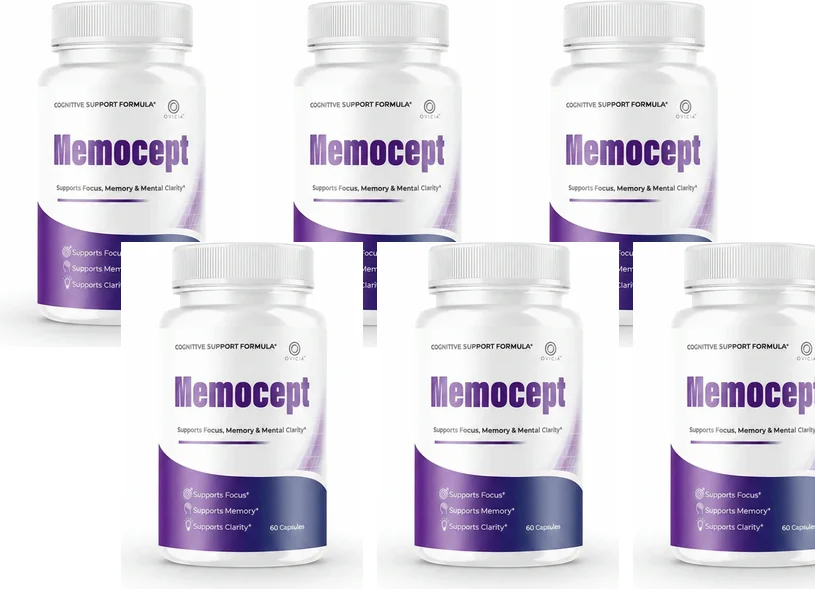
See how Memocept puts this together
Bacopa monnieri is one of the five actives the seller names in Memocept, alongside Huperzine-A, Rhodiola rosea, L-Tyrosine and green-coffee caffeine — with the evidence for each laid out.
Order Now