How Long Do Nootropics Take to Work? An Ingredient-by-Ingredient Timeline
Quick Answer: How Long Before a Nootropic Actually Does Something?
It depends entirely on which ingredient you mean — caffeine works in 30 to 60 minutes, while the memory-related ingredients need 8 to 12 weeks before you can judge them fairly. There is no single answer because a multi-ingredient capsule is not one drug; it is four or five substances on four or five separate clocks. Caffeine and L-theanine are same-hour. Rhodiola is days to a fortnight. Bacopa, huperzine A and omega-3 DHA are measured in months, and none of them produces anything you would feel on day one.
- Felt today: caffeine (30–60 min), L-theanine (~50 min in dose-response testing), Panax ginseng (acute, same session).
- Fair verdict window: 8–12 weeks for huperzine A and Bacopa; 12–24 weeks for omega-3 DHA.
- The trap: day one is the stimulant talking. Judging at day 10 judges only the caffeine.

The two questions people are actually asking
Almost every page on this topic answers the wrong question, or blurs two questions into one vague paragraph. Separate them and the topic becomes tractable.
Question one: when will I feel something? This is pharmacological onset — how long until the compound is in your blood at a level that produces a subjective change. For caffeine that is under an hour. For huperzine A, the honest answer is that there is no reliable acute sensation to wait for at all.
Question two: when can I fairly judge whether it works? This is the trial window — how long the researchers dosed people before they measured an outcome. It is the number that should govern your decision to keep buying something, and it is almost never the same as question one.
Confusing the two is why so many people conclude a supplement "stopped working" in week five. It did not stop. The only part that was ever going to be felt quickly was the stimulant, and stimulants adapt.
The timeline table: onset versus verdict, ingredient by ingredient
This is the table nobody on page one of the search results publishes. The middle two columns are the important ones, and they rarely agree.
| Ingredient | First noticeable effect | Time to a fair verdict | What the trial evidence used | Why the gap |
|---|---|---|---|---|
| Caffeine (incl. from green coffee bean) | 30–60 minutes | Same day — but tolerance shifts the picture within weeks | Acute single-dose crossover trials; peak plasma roughly 30–60 min, half-life commonly 4–6 hours with wide CYP1A2-driven variation | Directly blocks adenosine receptors. Nothing has to accumulate. |
| L-theanine | Roughly 30–60 minutes | Same day, per session | Dose-response crossover study in 32 healthy adults, 100/200/400 mg, testing 50 minutes after dosing | Crosses the blood-brain barrier quickly; effects are per-dose, not cumulative. |
| Panax ginseng (G115) | Acute, within the same test session | Single dose is enough to judge the acute effect | Reay et al. 2005 (single dose, 200/400 mg, testing from 60 min) and Reay et al. 2010 (200/400 mg over 8 days, n = 30) | The 2010 trial found no additional benefit from repeated ingestion — longer is not automatically better. |
| Rhodiola rosea | Days to about 2 weeks | 2–4 weeks | Darbinyan et al. 2000: 56 physicians on night duty, SHR-5 extract, two-week dosing periods | Studied against acute stress and fatigue rather than structural change. |
| Huperzine A (from clubmoss) | Nothing reliably acute | 8–12 weeks minimum | Dementia-population trials at 0.2–0.4 mg/day; per the ADDF Cognitive Vitality monograph, all completed trials ran 36 weeks or less | Works by slowing acetylcholine breakdown; the outcome measured is learning over time, not a felt buzz. |
| Bacopa monnieri | None acute | 8–12 weeks | Chronic-dosing trials at ~300 mg/day of standardised extract for 12 weeks | Benefits appear in retention and recall of newly learned material, which takes weeks to measure. |
| Omega-3 DHA | None acute | 12–24 weeks | MIDAS trial: 485 adults, 900 mg/day DHA, 24 weeks | Incorporates into cell membranes slowly; red blood cell levels take months to shift. |
Read down the "first noticeable effect" column and the design problem in every stimulant-plus-cholinergic formula becomes obvious. Exactly one ingredient is going to announce itself. Everything else is silent for weeks.
Why day one feels good and week six feels like nothing
This is the single most common experience with a caffeinated nootropic, and it has a boring explanation.
On day one, the caffeine lands. Peak blood levels arrive within about an hour, adenosine receptors are blocked, and you get a clean, unmistakable lift. It is easy to read that as "the formula works". What actually happened is that you took a stimulant on a body that was not used to it.
Over the following weeks, regular daily caffeine produces adaptation. The same dose delivers a smaller subjective change — increasingly it is restoring your new baseline rather than lifting you above your old one. Meanwhile the huperzine A and any Bacopa in the capsule have been silently doing whatever they do, on a timescale that produces no daily sensation at all.
So the curve most people report — strong start, gradual fade, quiet disappointment by week six — is caffeine tolerance drawn over the top of ingredients that were never going to be felt. The fade is not evidence the slow ingredients failed. It is evidence you were measuring the wrong thing.
The practical consequence: subjective "how alert do I feel" ratings are close to useless for evaluating a memory ingredient. If you want to judge the slow half of a formula, you need a slow-half measure — recall of names, meeting details you retained, whether the 4pm hour is still productive in week ten — recorded consistently, not remembered at the end.
The adherence arithmetic, stated as arithmetic. A 30-capsule bottle at one capsule per day lasts exactly 30 days. An 8-to-12-week assessment window is 56 to 84 days. One bottle therefore covers roughly 36% to 54% of the period the research would use. That is not a reason to buy more — it is a reason to decide up front whether you intend to run the full window at all. If the answer is no, the honest conclusion is that you will not learn anything from the trial, and not starting is a legitimate choice.
What the acute-dose evidence actually says about ginseng
Panax ginseng is the ingredient that most complicates the "take it for months" narrative, and the relevant work is worth naming precisely because it points the other way.
Reay, Kennedy and Scholey (Journal of Psychopharmacology, 2005) gave 30 healthy young adults a single dose of placebo, 200 mg or 400 mg of the standardised G115 extract and tested them repeatedly starting 60 minutes later. Both doses reduced blood glucose at all three post-treatment measurements; the 200 mg dose improved serial subtraction performance and reduced subjective mental fatigue during sustained mental effort. That is an acute, same-session effect from one capsule.
Reay, Scholey and Kennedy followed up (Human Psychopharmacology, 2010; PMID 20737519) with a placebo-controlled, double-blind crossover in 30 healthy volunteers taking 200 mg, 400 mg or placebo for 8 days, testing on day 1 and day 8. The 400 mg dose improved calmness and mental arithmetic on both days. Their conclusion is the counterintuitive part: no evidence of additional benefits, nor attenuation of acute effects, following repeated ingestion.
In plain terms: ginseng did not build up, and it did not wear off. It worked roughly the same on day 8 as on day 1. That is a genuinely different pattern from Bacopa or huperzine A, and it means "how long until it works" has different answers inside the same capsule.
Know what you are timing before you start the clock
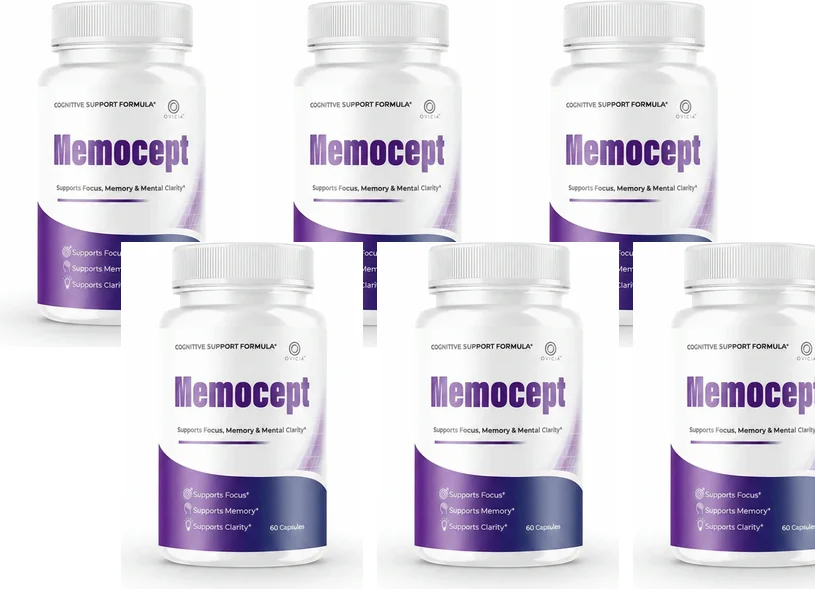
Memocept names all five actives — Bacopa monnieri, Huperzine-A, Rhodiola rosea, L-Tyrosine and caffeine from green coffee — with no proprietary blend, so you can map each one onto the table above rather than guess.
Order NowHuperzine A: the slowest clock in most formulas
Huperzine A is the anchor of the cholinergic story in a formula like Memocept, and it is also the ingredient with the least to offer someone looking for a day-one sensation.
The dose evidence comes almost entirely from dementia populations, and we report that as study context, not as a suggestion that a supplement addresses those conditions — it does not, and no dietary supplement is intended to. According to the Alzheimer's Drug Discovery Foundation's Cognitive Vitality monograph, dementia trials used 0.2 to 0.4 mg per day, all completed trials ran 36 weeks or less, and a Phase 2 trial found benefit at 0.4 mg twice daily but not at 0.2 mg twice daily. The monograph counts five meta-analyses or systematic reviews in dementia populations, two trials in healthy individuals, and zero prevention studies.
Those two healthy-individual trials matter here. Morasch and colleagues (Physiology & Behavior, 2015; PMID 25455867) tested huperzine A at 100 or 200 µg against galantamine, donepezil and placebo in healthy adults. Huperzine A measurably inhibited acetylcholinesterase in circulating blood — the mechanism did what it says on the tin — but it did not improve performance on the cognitive tests, which the authors attributed partly to ceiling effects in a young, healthy sample.
That is the honest headline for timing: with huperzine A there may be nothing to wait for, and if there is, the research timescale is weeks to months rather than hours. Our review of what the huperzine A, ginseng and caffeine evidence actually supports goes into the efficacy question in more detail.
What this timeline does not tell you
Several limits are worth stating plainly, because a tidy table can imply more precision than the underlying literature supports.
- Ingredient timelines are not product timelines. Every row above comes from a trial of a single ingredient at a specific dose. A finished multi-ingredient capsule has not been trialled, and the amounts it contains may be below the studied dose.
- "Time to a fair verdict" is a research convention, not a biological deadline. The 8-to-12-week figure reflects how long trials ran, not a point at which something switches on.
- Individual variation is large and mostly unpredictable. Caffeine clearance alone varies severalfold between people because of CYP1A2 differences, before you account for sleep, diet, age and medication.
- A longer trial does not guarantee a result. The ginseng data shows repeated dosing adding nothing, and a 36-week randomised trial of a citrus peel extract in older adults with subjective cognitive decline found improvement in both arms and no advantage over placebo — we cover that in detail in our piece on what the human evidence on citrus bergamot shows. The multi-year trials of standardised Ginkgo biloba for brain blood flow and memory make the same point on a far larger scale: years of dosing did not produce the outcome the marketing promised.
- None of this is about disease. If memory or concentration problems are persistent or getting worse, that is a reason to see a clinician. It is not a timing question and no supplement answers it.
A sane way to run the clock
If you are going to try a formula, the timeline above suggests a fairly obvious protocol.
Take it at the same time each morning, with food, and keep the dose constant — consistency matters more than clock precision for the slow ingredients, and morning dosing keeps the caffeine away from your sleep. Write down one or two concrete measures before your first capsule, not after. Expect the first fortnight to be dominated by caffeine and discount it accordingly. Then hold judgement until at least week eight, and compare against what you wrote down rather than against how you remember feeling. If you cannot commit to that, the timeline says you will not get an answer — and knowing that in advance is worth something too.
Frequently asked questions
How long do nootropics take to work?
It depends on the ingredient, and the honest answer comes in two parts. Caffeine reaches peak blood levels roughly 30 to 60 minutes after a dose, so anything stimulant-based is felt the same morning. Ingredients studied for memory, such as huperzine A and Bacopa monnieri, produce nothing acute at all, and the trials that tested them ran for weeks to months. A fair verdict window for a memory-oriented formula is 8 to 12 weeks of consistent daily use.
Why do I feel a nootropic on day one and nothing by week six?
That pattern is usually caffeine tolerance, not the formula failing. The day-one lift comes from the stimulant, which is the only part of most formulas that acts within an hour. Regular daily caffeine produces adaptation, so the same dose feels weaker after a few weeks. Meanwhile the slow ingredients have not had time to do anything you would notice. The result is a supplement that feels strong early and flat later, which tells you almost nothing about the ingredients you bought it for.
Is one bottle long enough to judge a nootropic?
Usually not, and it is simple arithmetic rather than a sales argument. A 30-capsule bottle taken once daily lasts exactly 30 days. An 8 to 12 week assessment window is 56 to 84 days. So a single bottle covers roughly a third to a half of the period the research would use, and judging at day 30 mostly judges the caffeine. If you are not prepared to run the full window, the more useful decision is often not to start.
How long does huperzine A take to work?
There is no reliable acute effect to notice. Huperzine A is a reversible acetylcholinesterase inhibitor, and the human trials that used it were conducted in dementia populations over weeks to months at 0.2 to 0.4 mg per day. According to the Alzheimer's Drug Discovery Foundation Cognitive Vitality monograph, all completed trials ran 36 weeks or less, and a Phase 2 trial found an effect at 0.4 mg twice daily but not at 0.2 mg twice daily. In healthy adults, a 2015 study found that huperzine A inhibited the enzyme in circulating blood without improving cognitive test performance.
Does taking a nootropic for longer make it work better?
Not automatically, and one well-designed trial makes the point neatly. Reay, Scholey and Kennedy gave 30 healthy volunteers Panax ginseng G115 at 200 mg, 400 mg or placebo for 8 days and tested on days 1 and 8. They found no evidence of additional benefit following repeated ingestion. Some ingredients accumulate a benefit over weeks and some simply act each time you take them, so longer is not a universal rule.
Medical note: this article is general information, not medical advice. These statements have not been evaluated by the Food and Drug Administration, and this product is not intended to diagnose, treat, cure or prevent any disease. Speak to a healthcare professional before starting any supplement, especially if you are sensitive to caffeine, take prescription medication, are pregnant or nursing, or are managing a health condition. Individual results vary.
Scientific references
- Reay J.L., Scholey A.B., Kennedy D.O. (2010) — Panax ginseng (G115) improves aspects of working memory performance and subjective ratings of calmness in healthy young adults, Human Psychopharmacology 25(6):462–471
- Reay J.L., Kennedy D.O., Scholey A.B. (2005) — Single doses of Panax ginseng (G115) reduce blood glucose levels and improve cognitive performance during sustained mental activity, Journal of Psychopharmacology 19(4):357–365
- Morasch K.C., Aaron C.L., Moon J.E., Gordon R.K. (2015) — Physiological and neurobehavioral effects of cholinesterase inhibition in healthy adults, Physiology & Behavior 138:165–172
- Alzheimer's Drug Discovery Foundation — Cognitive Vitality monograph: Huperzine A (dose ranges, trial durations and evidence counts)
- Darbinyan V. et al. (2000) — Rhodiola rosea in stress-induced fatigue: a double-blind cross-over study of standardized extract SHR-5 in healthy physicians during night duty, Phytomedicine
- Yurko-Mauro K. et al. (2010) — Beneficial effects of docosahexaenoic acid on cognition in age-related cognitive decline (MIDAS), Alzheimer's & Dementia — 485 adults, 900 mg/day DHA, 24 weeks
- Nehlig A. (2018) — Interindividual Differences in Caffeine Metabolism and Factors Driving Caffeine Consumption, Pharmacological Reviews 70(2):384–411
- Dassanayake TL, Kahathuduwa CN, Weerasinghe VS — Dose-response effect of L-theanine on psychomotor speed, sustained attention and inhibitory control, Nutr Neurosci 2023;26(11):1138–1147 (PMID 36263942) — double-blind, placebo-controlled crossover, 32 healthy adults, testing 50 minutes post-dose
Start the clock with the label in front of you
If you are going to run an eight-week window, run it on a formula that tells you what is in it. Memocept names every active individually rather than hiding them in a blend — check the ingredient list against the timeline above before you commit.
Order Now