Nootropic Drug Interactions and Who Should Avoid Them: Huperzine A, Ginseng and Caffeine
Quick Answer: Who Should Not Take a Nootropic Like This?
Anyone on a prescription acetylcholinesterase inhibitor, an anticoagulant or diabetes medication should clear it with a clinician first — huperzine A and Panax ginseng both have real, documented interaction routes, and the caffeine adds to whatever you are already drinking. Two of those three routes have a named mechanism rather than a vague warning. Huperzine A acts on the same enzyme as donepezil, galantamine and rivastigmine, which is why Memorial Sloan Kettering lists those drugs under its do-not-combine heading for Huperzia serrata. And a randomised controlled trial published in the Annals of Internal Medicine measured a real fall in warfarin's effect when ginseng was added. None of this makes a multi-ingredient capsule dangerous for a healthy adult taking no medication. It does mean the "natural, therefore safe" framing is wrong.
- The row that matters most: huperzine A plus a prescription cholinesterase inhibitor — additive, same mechanism.
- Also documented: ginseng with warfarin, ginseng with diabetes medication, caffeine with your own daily total.
- Hard stop: pregnancy, nursing, under 18, epilepsy, heart-rhythm medication, upcoming surgery — ask a clinician before, not after.

The interaction matrix nobody publishes
Drug databases cover one ingredient at a time. That is the wrong shape for the actual situation, which is a person taking a four-ingredient capsule alongside a prescription and three cups of coffee. The table below is the version we could not find anywhere else: every documented interaction route for the three active classes in a typical nootropic formula, with the mechanism, the plausible consequence, and what to do about it. Every row ends the same way for a reason.
| Ingredient | Interacts with | Mechanism | What can happen | What to do |
|---|---|---|---|---|
| Huperzine A (from clubmoss) | Prescription acetylcholinesterase inhibitors: donepezil, galantamine, rivastigmine | Identical mechanism — both slow the breakdown of acetylcholine, so the effect is additive | Excess salivation and sweating, nausea and vomiting, slowed heart rate, muscle weakness | Do not combine. Ask your doctor or pharmacist. |
| Huperzine A | Anticholinergic medicines (some bladder, allergy, sleep and Parkinson's drugs) | Opposing mechanisms — one raises acetylcholine, the other blocks its receptors | Either the drug or the supplement may work less well | Ask your doctor or pharmacist. |
| Huperzine A | Beta-blockers and calcium channel blockers | Cholinergic influence on cardiac conduction adds to rate-slowing medication | Bradycardia — a heart rate slower than intended | Ask your doctor or pharmacist. |
| Huperzine A | Dopamine D2 receptor blockers (some antipsychotics, some anti-nausea drugs) | Listed by Memorial Sloan Kettering as a combination to avoid | Parkinson-like symptoms: tremor, stiffness, slowed movement | Ask your doctor or pharmacist. |
| Huperzine A | A seizure disorder, diagnosed or suspected | Not a drug interaction — a condition interaction; cholinergic activity may lower seizure threshold | The Alzheimer's Drug Discovery Foundation records worsened epilepsy symptoms among its concerns | Ask your doctor or pharmacist. |
| Panax ginseng | Warfarin and other anticoagulant or antiplatelet drugs | A randomised trial found American ginseng reduced peak INR and plasma warfarin; NCCIH notes Asian ginseng may interfere with clotting | Anticoagulation drifts away from target | Ask your doctor or pharmacist. |
| Panax ginseng | Insulin, sulfonylureas, metformin and other glucose-lowering drugs | Additive — NCCIH states ginseng might lower blood sugar | Blood glucose lower than the prescription alone would produce | Ask your doctor or pharmacist. |
| Panax ginseng | An autoimmune condition | NCCIH notes it may worsen autoimmune disorders | Symptom flare | Ask your doctor or pharmacist. |
| Caffeine (from green coffee bean) | Blood pressure medication | Caffeine can transiently raise blood pressure | Readings that fight the medication rather than reflect it | Ask your doctor or pharmacist. |
| Caffeine | Every other caffeinated thing you consume | Purely additive against a daily total | Jitteriness, palpitations, disrupted sleep | Add it up against the 400 mg reference. See the worksheet below. |
Why the huperzine A row is the one that actually matters
Most supplement interaction warnings are theoretical. This one is not. Huperzine A is a reversible acetylcholinesterase inhibitor: it slows the enzyme that clears acetylcholine out of a synapse, which leaves more acetylcholine available. Donepezil, galantamine and rivastigmine are prescription acetylcholinesterase inhibitors. They do the same job, deliberately and at a titrated dose.
Put both into the same person and the effects add. Memorial Sloan Kettering's herb monograph for Huperzia serrata puts this plainly under its "do not take if" heading: if you are using those drugs, "huperzine works by the same mechanism and may increase the risk of adverse effects." The adverse effects catalogued for huperzine A alone already include nausea, vomiting, dizziness, sweating, bradycardia and insomnia. Stacking a second cholinesterase inhibitor on top of a titrated prescription pushes in the direction of cholinergic excess — too much salivation and sweating, a heart rate that drops, muscle weakness.
The practical version of this is short. If anyone in your household is on a dementia medication, a multi-ingredient nootropic is not a casual addition. It is a question for the prescribing clinician. The same applies to any medicine whose name you cannot place: the pharmacist who dispensed it can categorise it faster than you can search for it.
Panax ginseng, warfarin and blood sugar: read the species
The ginseng and warfarin story is real, and it is also routinely mis-stated. The trial people are citing is Yuan and colleagues, published in the Annals of Internal Medicine in 2004: a randomised, double-blind, placebo-controlled study in healthy adults taking warfarin. After two weeks, peak INR fell significantly in the ginseng group compared with placebo (difference −0.19, 95% CI −0.36 to −0.07, P = 0.0012), and warfarin's peak plasma level and area under the curve both dropped as well. The authors' conclusion was that physicians should ask patients about ginseng use.
Here is the detail nearly every supplement blog skips: that trial used American ginseng, Panax quinquefolius. Most nootropic formulas use Asian ginseng, Panax ginseng. They are different species with overlapping but not identical ginsenoside profiles, and the warfarin trial does not automatically transfer. What does apply directly is NCCIH's statement that Asian ginseng "may interfere with blood clotting." So the honest position is: one species has a measured, randomised interaction with warfarin, the other has a documented effect on clotting, and neither is something to work out alone while taking an anticoagulant.
The blood sugar route is simpler and better supported. NCCIH is direct about it: "Some evidence suggests that Asian ginseng might lower blood sugar levels. If you have diabetes, consult your health care provider before using Asian ginseng." If you are already on insulin or a sulfonylurea, an ingredient that nudges glucose down in the same direction as your medication is worth flagging before you start, not after a low reading.
The caffeine budget: arithmetic, not advice
Green coffee bean extract is in these formulas because it supplies caffeine. That is the fast-acting part, and it is also the part that stacks. The FDA's population-level reference for healthy adults is roughly 400 mg of caffeine a day as an amount not generally associated with negative effects, a figure Health Canada and EFSA arrived at independently. That is a population reference, not a personal safety line: individual sensitivity varies enormously, and the same 400 mg lands very differently on a fast metaboliser and a slow one.
Run your own total. The figures below are typical values from consumer-health sources and vary with brewing, cup size and brand.
| Source | Typical caffeine | Notes |
|---|---|---|
| Brewed coffee, 8 oz | ~80–100 mg | The single biggest line for most people; a large takeaway cup is often two servings |
| Espresso, 1 oz shot | ~60–65 mg | Less per cup than drip, more per ounce |
| Black tea, 8 oz | ~30–50 mg | Varies with steeping time |
| Green tea, 8 oz | ~25–30 mg | Also supplies L-theanine |
| Cola, 12 oz | ~30–40 mg | Easy to forget entirely |
| Energy drink, 8–16 oz | ~80–160 mg | Read the can; the range is wide |
| Nootropic capsule with green coffee extract | Read the Supplement Facts panel | Extracts differ in caffeine content, so there is no single number — the panel is the only source |
| FDA reference, healthy adults | ~400 mg/day | A population reference point, not a personal guarantee |
Two coffees, a tea and an energy drink is already in the 250–350 mg region before a capsule is added. If a capsule pushes you over a line you were already close to, the symptom you notice will not feel like a supplement side effect. It will feel like a bad night's sleep and a jittery afternoon. For the clock-time side of this — when a morning dose stops mattering and when it starts costing you sleep — see our companion piece on how L-theanine changes the way caffeine feels.
Know what is in the capsule before you check the interactions
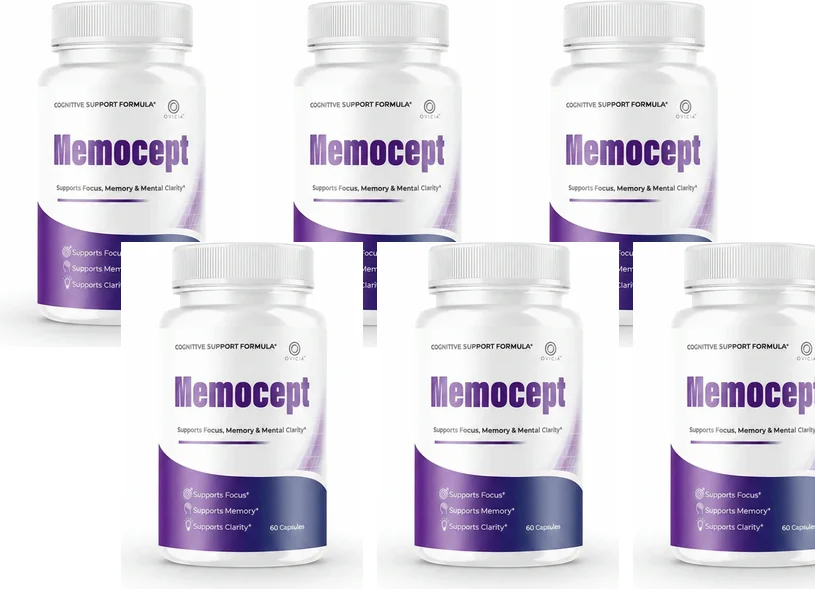
You cannot run any of this arithmetic without a label that names every active and its amount. Memocept lists all five of its ingredients — Bacopa monnieri, Huperzine-A, Rhodiola rosea, L-Tyrosine and caffeine from green coffee — with no proprietary blend hiding the list, on the main product page.
Order NowStop and ask a clinician first: the checklist
This is not a list of people who will be harmed. It is a list of people for whom a two-minute conversation with a pharmacist replaces guesswork. If any line applies to you, have that conversation before the first capsule.
- Pregnant or nursing. NCCIH advises against Asian ginseng in pregnancy and breastfeeding, noting that one of its constituents caused birth defects in animal studies.
- Under 18. Same NCCIH guidance, and there is no paediatric evidence base for any of these ingredients.
- Taking any cholinesterase inhibitor — donepezil, galantamine, rivastigmine. This is the additive-mechanism row above.
- Taking an anticoagulant or antiplatelet drug — warfarin, and by extension anything else prescribed to keep blood from clotting.
- Taking diabetes medication. Additive glucose lowering is a genuine consideration.
- Epilepsy or any seizure history. The ADDF monograph lists worsened epilepsy symptoms among its concerns.
- Bradycardia or any heart-rhythm medication, including beta-blockers and calcium channel blockers.
- Surgery scheduled. Tell the anaesthetist about every supplement, and expect to be asked to stop in advance.
- Caffeine sensitive, or managing insomnia or an anxiety disorder. The stimulant is the ingredient you will feel first.
- Taking anything at all you cannot categorise. Bring the bottle to the pharmacy counter.
What the evidence does not show
Honesty about the limits of this page matters more than the page itself, so here are five of them.
Most of these are mechanisms, not measured outcomes. With one exception, the rows in that matrix describe a plausible and well-understood pharmacological route, supported by monographs from Memorial Sloan Kettering, NCCIH and the Alzheimer's Drug Discovery Foundation. They are not each backed by a controlled interaction trial in humans. The exception is ginseng and warfarin, and even there the trial used a different species from the one usually in these capsules.
Nobody has tested this combination. There is no trial of huperzine A plus Panax ginseng plus green coffee plus citrus bergamot against any medication. Interaction risk here is assembled ingredient by ingredient because that is the only evidence that exists.
Absence of a warning is not evidence of safety. An ingredient with no documented interactions may simply be an ingredient nobody has studied. Citrus bergamot is a fair example: its human evidence base is metabolic and cardiovascular, and its interaction profile in a cognitive-support context is essentially unexamined.
Long-term safety data for huperzine A does not exist. The ADDF's summary is blunt: every trial ran 36 weeks or less, so long-term safety is unknown. That is a statement about the research base, not a claim of harm.
Labels are not always accurate. The US Department of Defense's Operation Supplement Safety programme has reported multi-ingredient huperzine A products containing amounts inconsistent with their own Supplement Facts panels, and containing ingredients not permitted in dietary supplements. Third-party testing marks and a willingness to supply a certificate of analysis are the practical defence.
Finally, the obvious: nothing here is medical advice, no supplement described on this page treats or prevents any condition, and no one should stop, start or change a prescription because of an article. For the dose side of the huperzine A question — how many micrograms the trials actually used, and how that compares with what is on a label — see our huperzine A dosage guide. For what the ingredients do or do not do for cognition, see the evidence review of huperzine A, ginseng and caffeine.
Frequently asked questions
Can you take a nootropic with donepezil or another Alzheimer's medication?
Not without clearing it with the prescribing clinician first. Huperzine A works by the same mechanism as donepezil, galantamine and rivastigmine: all of them slow the breakdown of acetylcholine. Taking two acetylcholinesterase inhibitors together makes the effects additive, and Memorial Sloan Kettering lists these drugs under its do-not-combine heading for Huperzia serrata. Excess salivation and sweating, nausea, a slowed heart rate and muscle weakness are the effects to be aware of. This is the one interaction on the list that can genuinely matter.
Does Panax ginseng interfere with warfarin?
Possibly, and there is a randomised trial pointing that way, but read the species carefully. Yuan and colleagues gave American ginseng (Panax quinquefolius) to healthy adults taking warfarin and measured a statistically significant fall in peak INR against placebo after two weeks (Annals of Internal Medicine, 2004). Most nootropic capsules use Asian ginseng (Panax ginseng), a different species, and NCCIH separately notes that Asian ginseng may interfere with blood clotting. If you take warfarin or any other anticoagulant, this is a conversation for your doctor or pharmacist, not a decision to make from a label.
How much caffeine is in a nootropic capsule?
It depends on the formula and you have to read the Supplement Facts panel to find out. Green coffee bean extract supplies caffeine, but the amount varies widely between products because extracts differ in how much caffeine survives processing. Treat whatever the panel says as an addition to your coffee, tea, cola and energy drinks, not as a replacement for them. The FDA reference point for healthy adults is about 400 mg of caffeine a day, and a capsule plus three coffees can get closer to that than people expect.
Who should avoid brain supplements entirely?
Anyone pregnant or nursing, anyone under 18, and anyone with a seizure disorder should not take a formula of this kind. The Alzheimer's Drug Discovery Foundation notes that huperzine A might lower heart rate and worsen some epilepsy symptoms, so a history of bradycardia, heart-rhythm medication or epilepsy is a reason to stop and ask. So is an upcoming operation, anticoagulant therapy, diabetes medication and any cholinergic or anticholinergic prescription. If you are unsure which category a medicine falls into, a pharmacist can tell you in about a minute.
Is a natural nootropic safer than a prescription drug?
Not automatically, and the reasoning behind that assumption is backwards. An ingredient that produces an effect can produce an interaction, and huperzine A is a good example: it is a plant-derived compound that acts on the same enzyme as a prescription drug. Dietary supplements are also not reviewed for safety and effectiveness before sale, and the US Department of Defense Operation Supplement Safety programme has reported multi-ingredient huperzine A products containing amounts inconsistent with their own labels. Natural describes the origin of a molecule, not its risk profile.
Medical note: this article is general information about interaction risk, not medical advice, and it is not a substitute for a pharmacist or physician. Never start, stop or adjust a prescription medicine on the basis of a web page. Speak to a healthcare professional before starting any supplement, especially if you are pregnant or nursing, take prescription medication, or are managing a health condition.
Scientific references
- Memorial Sloan Kettering Cancer Center — Huperzia serrata (huperzine A): herb-drug interactions, adverse reactions and contraindications
- Alzheimer's Drug Discovery Foundation, Cognitive Vitality — Huperzine A monograph (dose ranges, safety concerns, 36-week trial ceiling)
- Operation Supplement Safety, US Department of Defense — Huperzine A and dietary supplements for brain health
- Yuan C.S., Wei G., Dey L., et al. — American ginseng reduces warfarin's effect in healthy patients: a randomized controlled trial, Annals of Internal Medicine 2004;141(1):23–27 (PMID 15238367)
- NCCIH (National Center for Complementary and Integrative Health) — Asian ginseng: safety, side effects and interactions
- Mayo Clinic — Caffeine: how much is too much? (400 mg/day adult reference and typical beverage contents)
- Li J., Wu H.M., Zhou R.L., Liu G.J., Dong B.R. — Huperzine A for Alzheimer's disease, Cochrane Database of Systematic Reviews 2008;(2):CD005592 (PMID 18425924)
- Reay J.L., Scholey A.B., Kennedy D.O. — Panax ginseng (G115) improves aspects of working memory performance and subjective ratings of calmness in healthy young adults, Human Psychopharmacology 2010;25(6):462–471 (PMID 20737519)
A formula that shows you every ingredient
Interaction checking only works when the label is honest about what is inside. Memocept names all five actives — Bacopa monnieri, Huperzine-A, Rhodiola rosea, L-Tyrosine and caffeine from green coffee — with no proprietary blend, so you and your pharmacist can see exactly what you would be adding. Check with a clinician first if any line on the checklist above applies to you.
Order Now