Huperzine A Dosage: How Much the Studies Used, and Why Micrograms Matter
Quick Answer: How Much Huperzine A Do the Studies Actually Use?
Dementia trials used 0.2 to 0.4 mg a day — 200 to 400 micrograms — while typical supplements contain 50 to 200 micrograms, which means many labels sit below the dose that produced an effect in the research. The sharpest version of that gap comes from a Phase 2 study summarised by the Alzheimer's Drug Discovery Foundation: 0.4 mg twice daily showed some benefit, and 0.2 mg twice daily did not. A capsule containing 100 mcg is one eighth of the dose that worked in that trial. Two caveats have to travel with every number on this page. All of it comes from studies in people with Alzheimer's disease or vascular dementia, so it is study context, not a recommendation. And in healthy adults, huperzine A has not been shown to improve cognition at any dose.
- Trial range: 0.2–0.4 mg/day (200–400 mcg), 8–16 weeks, dementia populations.
- Supplement range: 0.05–0.2 mg (50–200 mcg) — at or below the bottom of the trial range.
- Unit trap: 1 mg = 1,000 mcg. The literature switches units mid-sentence; labels get misread by a factor of 1,000.

Micrograms versus milligrams: the trap that costs a factor of 1,000
Start here, because nothing else on the page is readable until this is settled. One milligram is 1,000 micrograms. Huperzine A is dosed in a range where both units look reasonable, so the published literature genuinely does write 0.4 mg/day in one paragraph and 400 mcg in the next, meaning exactly the same thing. Supplement labels then add a third layer by listing the plant extract rather than the compound.
Here is the conversion worked all the way through:
- 1 mg = 1,000 mcg. Also written µg.
- 0.2 mg = 200 mcg. The bottom of the dementia trial range.
- 0.4 mg = 400 mcg. The top of that range, and the single-dose figure in the Phase 2 study that showed an effect at twice-daily dosing.
- 100 mcg = 0.1 mg. An extremely common supplement figure, and half of the lowest trial dose.
Now the standardisation layer. A label reading Clubmoss extract (Huperzia serrata) 10 mg, standardised to 1% huperzine A delivers 10 mg × 1% = 0.1 mg = 100 mcg of huperzine A. The 10 mg is the extract. The 100 mcg is the ingredient the research is about. A different label reading Clubmoss extract 100 mg standardised to 0.5% delivers 500 mcg — five times as much active from a plant weight that only looks ten times bigger. If a label gives you an extract weight with no standardisation percentage, you cannot calculate the active dose at all, and neither can anyone else. That is a broader problem worth its own treatment; we cover the arithmetic of it in the standardisation section of our Bacopa review, where the same issue applies to bacosides.
The dose ladder: every dose, and the trial it came from
This is the table the drug databases do not publish. Each row pairs a dose with the specific place that dose appears in the literature, the population it was tested in, and how relevant it is to a healthy adult reading a label. Read the right-hand column before the left-hand one.
| Daily dose | Where this dose appears | Population studied | Duration | Outcome | Relevance to a healthy adult |
|---|---|---|---|---|---|
| 50–100 mcg (0.05–0.1 mg) | The commonest figure on nootropic capsule labels | None — no trial used this dose | — | No trial evidence exists at this dose | Below every dose in the research literature |
| 0.05–0.2 mg (50–200 mcg) | The full commercial supplement range recorded by the ADDF Cognitive Vitality monograph | Not a trial range | — | Not tested as a range | Where almost every label on the market sits |
| 0.2–0.4 mg/day (200–400 mcg) | Dementia trials summarised by the ADDF Cognitive Vitality monograph | Alzheimer's disease and vascular dementia | 8–16 weeks; no trial ran beyond 36 weeks | Meta-analyses of small trials report improvements on cognitive and daily-function scales | Study context only — the population is not a healthy adult |
| 300–500 mcg/day | Four randomised trials pooled by Wang B.S. et al., J Neural Transm 2009 (PMID 19221692) | Alzheimer's disease | 8–24 weeks | Significant improvement in MMSE and activities-of-daily-living scores | Same caveat — a patient population, and small trials |
| 0.4 mg twice daily (800 mcg/day) | A Phase 2 trial noted in the ADDF monograph | Alzheimer's disease | Phase 2 | Some benefit at 0.4 mg twice daily; none at 0.2 mg twice daily | Roughly 4 to 16 times a typical supplement dose |
| Any dose, healthy adults | Morasch et al. 2015, Physiology & Behavior 138:165–172 | 84 healthy military personnel | — | No cognitive improvement | The most directly relevant row on this table |
| Any dose, mild cognitive impairment | Yue J. et al., Cochrane Database Syst Rev 2012 (PMID 23235666) | Mild cognitive impairment | — | Zero eligible randomised trials found | There is no evidence base here at all |
Two things fall out of that table immediately. The first is that the commercial dose range and the trial dose range barely overlap: labels cluster at 0.05–0.2 mg while the studies ran at 0.2–0.4 mg, and the dose with the clearest signal was 0.8 mg a day split into two. The second is more important and cuts the other way. Raising the dose to match a dementia trial would not make a healthy person's memory better, because the two studies that looked at healthy people did not find an effect to scale up. A dose gap only matters if the higher dose does something, and in healthy adults there is no evidence that it does.
What five reviews actually counted
The ADDF Cognitive Vitality monograph gives a headline statistic that is worth more than any individual trial: for huperzine A there are 5 meta-analyses or systematic reviews of small clinical trials in Alzheimer's disease or vascular dementia, 2 clinical trials in healthy individuals, and 0 observational studies or trials on prevention of dementia or cognitive decline. That is the entire shape of the evidence base in one line. Here is what those reviews found.
| Review | Year | Population | Trials included | What the authors concluded |
|---|---|---|---|---|
| Li J. et al., Cochrane Database Syst Rev (PMID 18425924) | 2008 | Alzheimer's disease | 6 RCTs, 454 patients | Some beneficial effects reported, but "only one study was of adequate quality and size" and there is "inadequate evidence to make any recommendation about its use" |
| Hao Z. et al., Cochrane Database Syst Rev (PMID 19370686) | 2009 | Vascular dementia | 1 trial, 14 participants | No convincing evidence of value in vascular dementia; further research warranted |
| Wang B.S. et al., J Neural Transm (PMID 19221692) | 2009 | Alzheimer's disease | 4 RCTs | 300–500 mcg daily for 8–24 weeks produced significant improvement in MMSE and ADL scores |
| Yang G. et al., PLoS ONE (PMID 24086396) | 2013 | Alzheimer's disease | Systematic review and meta-analysis of RCTs | Positive signal, but the included trials were small, short and at high risk of bias |
| Xing S.H. et al., Evid Based Complement Alternat Med (PMID 24639880) | 2014 | Alzheimer's disease and vascular dementia | 8 AD trials (733 participants), 2 VaD trials (92) | Cognitive improvement reported; the vascular dementia evidence rests on very few participants |
| Yue J. et al., Cochrane Database Syst Rev (PMID 23235666) | 2012 | Mild cognitive impairment | 0 eligible trials | "The currently available evidence is insufficient to assess the potential for huperzine A in the treatment of MCI" |
Note what happens as the population gets closer to a healthy person. Alzheimer's disease has six trials and 454 patients behind a cautious positive. Vascular dementia has one trial and fourteen people. Mild cognitive impairment has nothing. Healthy adults have two trials and a null result. The evidence is not merely thin at the healthy end of the spectrum — it thins in a consistent direction, which is the pattern you would expect if the effect is specific to a cholinergic deficit rather than general.
Check the label before you check anything else
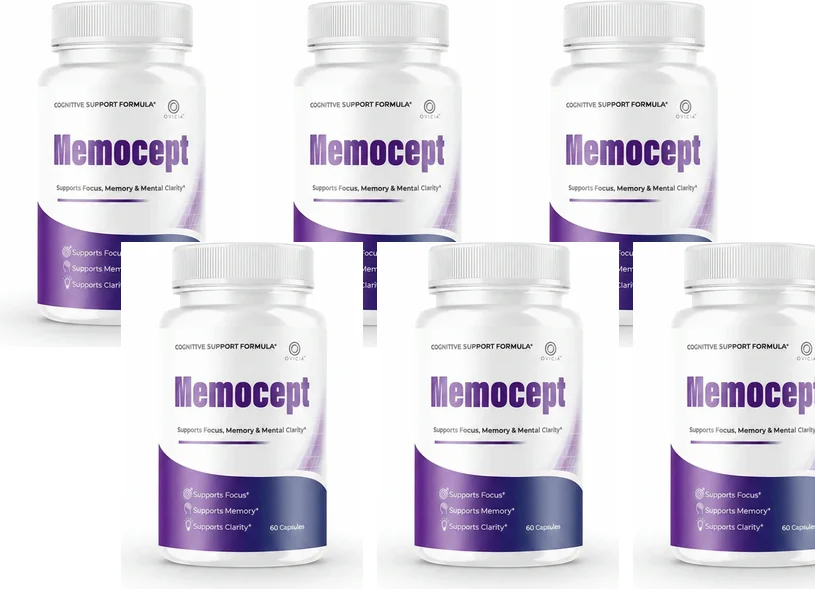
The only way to know how much huperzine A you would actually be taking is a Supplement Facts panel that names the extract, the standardisation percentage and the resulting microgram figure. Memocept names all five actives — Bacopa monnieri, Huperzine-A, Rhodiola rosea, L-Tyrosine and caffeine from green coffee — with no proprietary blend, though per-capsule amounts were not published on the pages we reviewed. The full ingredient list is on the main product page.
Order NowTiming, duration of action and the cycling question
Huperzine A has no acute, felt effect, which means clock timing is far less important for it than for the caffeine that usually accompanies it in a formula. Published human pharmacokinetic work reports a reasonably long elimination phase, though the estimates vary a good deal between studies — roughly five hours after one single-dose protocol and closer to twelve after another, with a commonly quoted range of about 10 to 14 hours. The spread is wide enough that no one should build a schedule around a precise half-life figure.
What the trials do establish clearly is duration. They dosed daily, for 8 to 24 weeks, and measured at the end. Nothing in that literature supports taking it on demand before a difficult afternoon. Consistency over weeks is how the compound was studied, and it is the only pattern with evidence behind it.
Morning dosing is the usual convention for two practical reasons rather than a pharmacological one: most formulas containing huperzine A also contain caffeine, which argues for early, and insomnia appears on the adverse-effect list for huperzine A itself. As for cycling — four weeks on, one week off, and the many variants circulating on forums — no trial has tested any cycling schedule. Every protocol you will read is convention, not evidence, and should be described that way.
One duration limit is worth stating on its own. The ADDF monograph notes that every huperzine A trial ran 36 weeks or less, so long-term safety is simply unknown. That is a gap in the research record, not a finding of harm, but it is a real gap.
What the evidence does not show
It does not show that huperzine A helps healthy people at any dose. Morasch and colleagues found no cognitive improvement in 84 healthy military personnel in 2015, and Operation Supplement Safety, run by the US Department of Defense, states plainly that no studies have shown huperzine A to enhance cognitive performance in otherwise healthy individuals. The two trials in healthy people that the ADDF counted did not produce a signal.
It does not transfer from dementia trials to everyday use. Nearly all the dose evidence on this page comes from Alzheimer's and vascular dementia populations. Those are the study contexts, reported here as study contexts. Nothing in this article suggests that any supplement treats, prevents or slows the progression of dementia, Alzheimer's disease or any other condition — it does not, and a dietary supplement is not a drug.
It does not establish an optimal supplement dose. Because no trial ran at 50 or 100 mcg, "is 100 mcg enough" has no evidence-based answer. It has only a positional one: below the trial range.
It does not tell you what is really in the bottle. Operation Supplement Safety has reported multi-ingredient huperzine A products containing amounts inconsistent with their Supplement Facts labels, and containing ingredients not permitted in dietary supplements. Third-party testing and a certificate of analysis by lot number are the practical checks.
And dose is not the same question as efficacy. This article deliberately stays on micrograms, units, timing and labels. For whether the ingredient does anything in the first place, and how it sits alongside ginseng and caffeine, read our separate review of what the research shows for huperzine A, ginseng and caffeine. Before you take it alongside any prescription, read the interaction matrix and who should avoid these formulas — huperzine A shares its mechanism with several prescription drugs, and that is the one place where dose arithmetic becomes a safety question.
How to check your own label in two minutes
- Find the huperzine A line. It may be listed as huperzine A, or as Huperzia serrata or clubmoss extract. If it is inside a proprietary blend with only a total weight, stop — the dose is unknowable.
- Identify the unit. mcg, µg and mg all appear. Convert everything to micrograms: multiply mg by 1,000.
- Apply the standardisation. Extract weight × percentage = active dose. 10 mg at 1% is 100 mcg.
- Place it on the ladder. Compare with 200–400 mcg (dementia trial range) and 800 mcg/day (the Phase 2 dose that showed an effect).
- Remember the ceiling. A dose closer to the trial range is not automatically better, because the healthy-adult trials found nothing to amplify. Higher also means more of the cholinergic effects listed in the safety literature.
- Take it to a pharmacist if you are on any medication at all, particularly a cholinesterase inhibitor, a beta-blocker or an anticoagulant.
Frequently asked questions
How much huperzine A did the studies actually use?
Dementia trials used roughly 0.2 to 0.4 mg a day, which is 200 to 400 micrograms, according to the Alzheimer's Drug Discovery Foundation's Cognitive Vitality monograph. A 2009 meta-analysis by Wang and colleagues pooled four randomised trials using 300 to 500 micrograms daily for 8 to 24 weeks. A Phase 2 study noted by the same monograph found some benefit at 0.4 mg twice daily but not at 0.2 mg twice daily. Every one of those figures comes from trials in people with Alzheimer's disease or vascular dementia, not from healthy adults.
Is 100 mcg of huperzine A enough?
There is no trial that tested 100 micrograms, so the honest answer is that nobody knows. What is knowable is where 100 micrograms sits relative to the research: it is half the bottom of the 0.2 to 0.4 mg range used in dementia trials, and one eighth of the 0.4 mg twice daily dose that showed an effect in the Phase 2 study where 0.2 mg twice daily did not. Most commercial supplements contain 0.05 to 0.2 mg, so a 100 microgram label is normal for the market and below the range the studies used.
What is the difference between mcg and mg on a huperzine A label?
One milligram equals 1,000 micrograms, and huperzine A is one of the few supplement ingredients where the literature switches between the two units mid-paragraph. So 0.2 mg and 200 mcg are the same amount, and 0.4 mg is 400 mcg. The other unit trap is standardisation: a label reading clubmoss extract 10 mg standardised to 1 percent huperzine A delivers 0.1 mg, or 100 micrograms, of the active. The large number is the extract. The small number is the ingredient the research is about.
When should you take huperzine A, and should you cycle it?
Morning is the conventional choice, mainly because most formulas that contain it also contain caffeine, and because published human pharmacokinetic work reports a fairly long elimination phase, with half-life estimates ranging from about five hours to roughly twelve hours across studies. Consistency matters more than clock time for this ingredient: the trials dosed daily for 8 to 24 weeks, not on demand. Cycling schedules circulate widely online, but no trial has tested one, so any cycling protocol you read is convention rather than evidence.
Does huperzine A work in healthy people?
The evidence says no. Morasch and colleagues studied 84 healthy military personnel in 2015 and reported no cognitive improvement (Physiology and Behavior, volume 138). The US Department of Defense's Operation Supplement Safety programme states flatly that no studies have shown huperzine A to enhance cognitive performance in otherwise healthy individuals. A Cochrane review of huperzine A for mild cognitive impairment found zero eligible randomised trials to analyse. The dose evidence in this article comes almost entirely from dementia populations and does not transfer to a healthy adult.
Medical note: the doses described here are reported as study context from published clinical trials, most of them in people with diagnosed dementia. They are not dosing advice, and this article is not medical advice. Dietary supplements are not intended to diagnose, treat, cure or prevent any disease. Speak to a healthcare professional before starting any supplement, especially if you are pregnant or nursing, take prescription medication, have a seizure disorder or a heart-rhythm condition, or are concerned about memory changes.
Scientific references
- Alzheimer's Drug Discovery Foundation, Cognitive Vitality — Huperzine A monograph (commercial 0.05–0.2 mg range, dementia-trial 0.2–0.4 mg/day range, the 0.4 mg twice-daily Phase 2 finding, and the 36-week trial ceiling)
- Li J., Wu H.M., Zhou R.L., Liu G.J., Dong B.R. — Huperzine A for Alzheimer's disease, Cochrane Database of Systematic Reviews 2008;(2):CD005592 (PMID 18425924)
- Hao Z., Liu M., Liu Z., Lv D. — Huperzine A for vascular dementia, Cochrane Database of Systematic Reviews 2009;(2):CD007365 (PMID 19370686)
- Wang B.S., Wang H., Wei Z.H., et al. — Efficacy and safety of natural acetylcholinesterase inhibitor huperzine A in the treatment of Alzheimer's disease: an updated meta-analysis, Journal of Neural Transmission 2009;116(4):457–465 (PMID 19221692)
- Yang G., Wang Y., Tian J., Liu J.P. — Huperzine A for Alzheimer's disease: a systematic review and meta-analysis of randomized clinical trials, PLoS ONE 2013;8(9):e74916 (PMID 24086396)
- Xing S.H., Zhu C.X., Zhang R., An L. — Huperzine A in the treatment of Alzheimer's disease and vascular dementia: a meta-analysis, Evidence-Based Complementary and Alternative Medicine 2014;2014:363985 (PMID 24639880)
- Yue J., Dong B.R., Lin X., Yang M., Wu H.M., Wu T. — Huperzine A for mild cognitive impairment, Cochrane Database of Systematic Reviews 2012;12:CD008827 (PMID 23235666)
- Operation Supplement Safety, US Department of Defense — Huperzine A: dietary supplements for brain health (no cognitive enhancement demonstrated in healthy individuals; label-accuracy findings)
See the numbers on an actual label
Memocept uses Huperzine-A alongside Bacopa monnieri, Rhodiola rosea, L-Tyrosine and green-coffee caffeine in a once-daily capsule, and names every ingredient rather than hiding them in a blend — so you can run the microgram arithmetic above against the panel on the bottle you receive.
Order Now