How to Read a Nootropic Supplement Label: Proprietary Blends, Doses and Red Flags
Quick Answer: What Should You Check First on a Nootropic Label?
Look for a milligram figure on its own line next to every active ingredient — if the label shows one lump weight for a named “blend”, you cannot evaluate the formula and neither can anyone else. That check settles most purchases in about ten seconds. If the panel does give individual amounts, the second step is arithmetic rather than trust: compare each number against the dose used in human trials. A great many nootropic labels list impressive ingredients at amounts no study has ever tested.
- Check first: an individual mg figure next to each active, not one blend total.
- Then check: each amount against the dose used in published human trials.
- Ignore: “pharmaceutical grade”, “lab tested” and “FDA registered facility” — none is a legal standard.
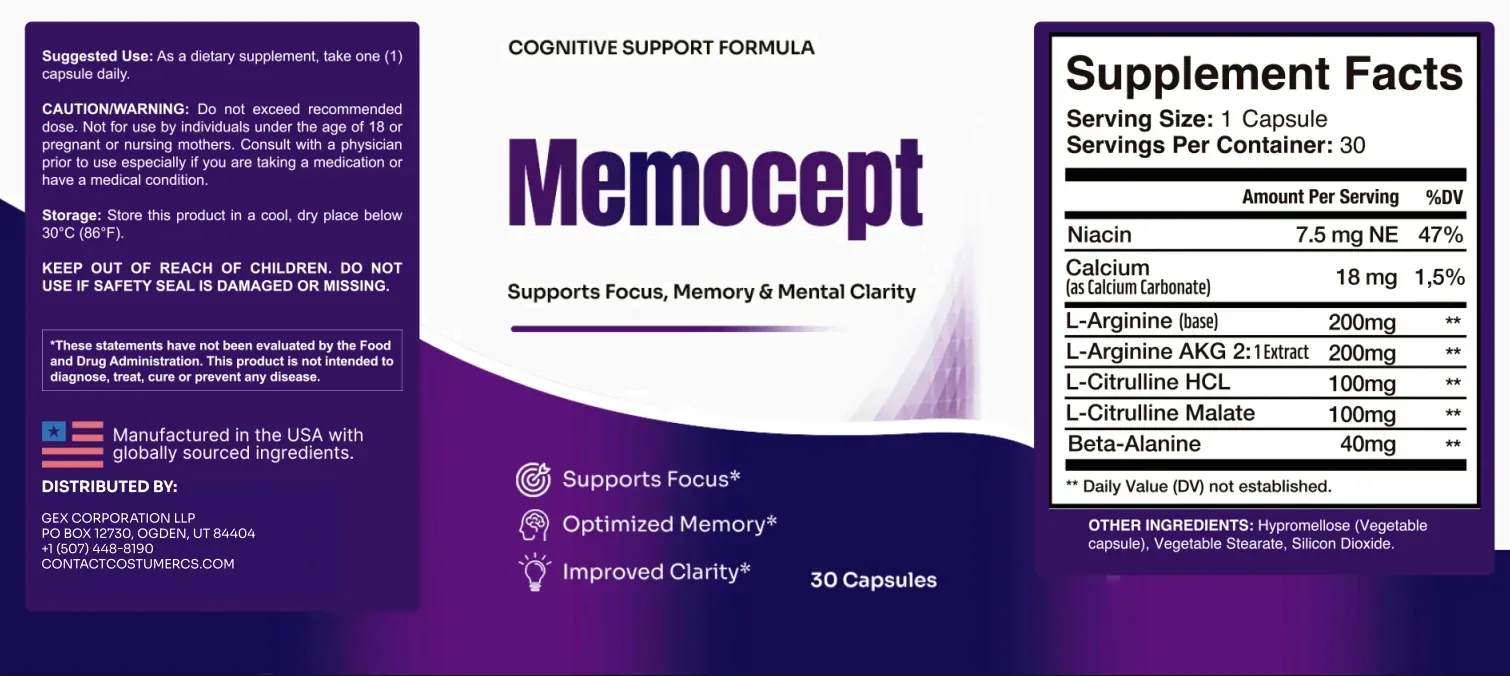
The five-minute label audit, in order
Most label guides explain what a proprietary blend is and stop there. What actually helps at the shelf is a fixed sequence you run every time, so the decision gets made by the panel rather than the packaging.
- Serving size versus capsules per bottle. If the serving is two capsules and the bottle holds 60, that is a 30-day supply. Every milligram figure on the panel refers to the whole serving, not one capsule.
- Individual amounts or a blend total. One number per named ingredient means you can audit it. One number for a group of ingredients means you cannot.
- Standardisation. “Panax ginseng root extract” and the same extract “standardised to 4% ginsenosides” are different products at the same weight. Botanical trials almost always use a standardised extract.
- Units. Milligrams and micrograms sit side by side on the same panel and differ by a factor of 1,000. This is where a dose is most often misjudged.
- Compare against the trials. Use the reference table below.
- Check the “other ingredients” line for allergens, and the caffeine content if you are stimulant sensitive.
What a proprietary blend is legally required to tell you
A proprietary blend is not a black box. Under the US dietary supplement labelling regulation at 21 CFR 101.36(c)(2), the ingredients inside a proprietary blend must be declared in descending order of predominance by weight, indented under the blend name, with the total weight of the blend on the same line as the blend name.
Three things follow, and almost nobody points them out. First, the blend must name every dietary ingredient in it; a manufacturer cannot legally include something and leave it off the panel. Second, the order is information. The ingredient printed first is present in the greatest amount and the one printed last in the smallest, so if a formula sells itself on an ingredient that appears sixth of seven, the marketing and the panel are telling different stories. Third, the total weight is a hard ceiling that every ingredient inside has to fit within. That ceiling is what makes the next section possible.
Blend arithmetic: exposing an underdose with subtraction
This is the part the incumbent label guides leave out, and it takes about twenty seconds. You do not need to know the individual amounts. You only need the total, the order, and one published dose.
Worked example. A hypothetical panel reads: Cognitive Blend 450 mg — Bacopa monnieri extract, L-theanine, Panax ginseng extract, Rhodiola rosea extract, Ginkgo biloba extract, Huperzia serrata extract. Bacopa is listed first, so it is the largest component. Bacopa trials use 300 mg of standardised extract daily. If this blend genuinely delivers a studied Bacopa dose, then 450 − 300 = 150 mg is left for the remaining five ingredients, an average of 30 mg each. L-theanine is studied at 100 to 200 mg. Ginseng at 200 to 400 mg. Ginkgo trials typically use 120 to 240 mg. None of those can fit. And if Bacopa is not at 300 mg, then the largest ingredient in the blend is already below its studied dose and everything behind it is smaller still. Either way, the formula cannot deliver studied amounts of six ingredients in 450 mg. The arithmetic closes both doors.
That is the technique. Subtract the trial dose of the first-listed ingredient from the blend total, divide what is left by the ingredients remaining, and ask whether that average is plausible for any of them. When it is not, you have learned something real without the manufacturer disclosing anything. A formula that names all its actives individually — the approach on the Memocept ingredient panel — hands you those numbers instead.
The clinically studied dose reference table
Label reading only becomes actionable when you have something to compare against. These are the amounts used in published human research for ingredients that turn up repeatedly on nootropic panels, next to the amounts commonly printed on labels.
| Ingredient | Dose range used in human trials | Common amount seen on labels | Source |
|---|---|---|---|
| Huperzine A | 0.2–0.4 mg/day (200–400 mcg) in dementia trials, up to 36 weeks; a Phase 2 trial found benefit at 0.4 mg twice daily but not 0.2 mg twice daily | 0.05–0.2 mg (50–200 mcg), frequently below the trial range | Alzheimer's Drug Discovery Foundation, Cognitive Vitality monograph |
| Panax ginseng (G115 extract) | 200–400 mg, acute single dose; the 400 mg dose carried the effects on mental arithmetic and calmness | 100–200 mg, often unstandardised | Reay, Scholey & Kennedy, Hum Psychopharmacol 2010, PMID 20737519 |
| Bacopa monnieri (standardised) | 300 mg/day for 12 weeks; effects build over weeks, never acutely | 100–300 mg, frequently without a bacoside percentage | Calabrese et al. 2008; Stough et al. 2001 |
| Caffeine | ~40–200 mg acutely; the European Food Safety Authority accepted 75 mg as the threshold for increased alertness and attention | Highly variable, and often undeclared when it arrives via a botanical extract | EFSA Journal 2011;9(4):2054 |
| Chlorogenic acid (from coffee) | 224–553 mg/day across the six pooled trials — and the pooled cognitive effect was d = 0.00 | Usually not stated at all; only the extract weight appears | Johal et al., Nutr Res Rev 2025;38(1):393–406, DOI 10.1017/S0954422424000209 |
| Citicoline | 500 mg/day for 12 weeks in older adults with age-associated memory impairment | 100–250 mg, commonly half the studied amount or less | Nakazaki et al., J Nutr 2021;151(8):2153–2160, PMID 33978188 |
One caution: this is a comparison tool, not a target. A dose matching a trial does not mean the trial found a meaningful result, and the chlorogenic acid row shows why — the doses were large and the pooled effect was exactly zero. The microgram row deserves its own read: see how much huperzine A the studies actually used. The wider efficacy question is covered in the huperzine A, ginseng and caffeine evidence, and the Bacopa figures in our Bacopa monnieri review.
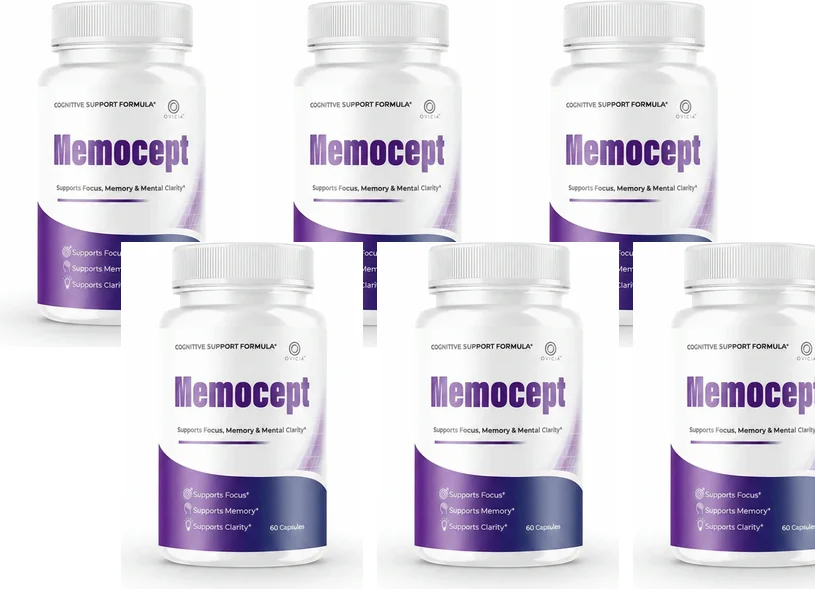
A label that names every active
Memocept names all five actives — Bacopa monnieri, Huperzine-A, Rhodiola rosea, L-Tyrosine and caffeine from green coffee — with no proprietary blend to hide behind. Run the audit above against the panel on the bottle you receive.
Order NowThird-party marks: which registries are real, and what they prove
A certification logo printed on a carton is a graphic. A certification you can look up in a public registry is a fact. These are the programmes worth checking, and where you verify the specific product rather than the brand.
| Programme | Where to verify | What it confirms | What it does not confirm |
|---|---|---|---|
| USP Verified | quality-supplements.org | Ingredients and potency match the label; no harmful levels of specified contaminants; made under FDA current good manufacturing practices; the product dissolves within a set time | That the ingredient or dose produces any benefit |
| NSF | nsf.org | Label accuracy, contaminant screening and facility audit against NSF/ANSI 173 | Efficacy; NSF certification is a quality mark only |
| Informed Sport | informed-sport.com | Every batch screened for substances banned in sport | Efficacy, and it is irrelevant unless you are drug-tested |
| Certificate of Analysis (CoA) | Request from the seller by lot number | The tested identity, potency and contaminant results for your batch | Nothing, if the company will not produce one |
The Certificate of Analysis request is the most underused tool here, and the script is short. Find the lot number on the bottle and email: “Please send the Certificate of Analysis for lot [number], including identity, potency and heavy metal testing, and confirm whether the testing was in-house or by an independent laboratory.” A company that tests properly will send it. One that sends a generic specification sheet with no lot number has answered your question anyway.
Red flags and the phrases that mean nothing
Some label language is regulated. Most is not, and knowing which is which stops a carton doing your thinking for you.
| Phrase on the label | What it legally means | Verdict |
|---|---|---|
| “Pharmaceutical grade” | Nothing. There is no legal definition for dietary supplements | Ignore |
| “Lab tested” | Nothing specific. Every manufacturer tests something | Ignore unless a lab and a scope are named |
| “Clinically proven blend” | Usually that an ingredient has been studied, not this blend at this dose | Ask which trial, and on which formula |
| “Made in an FDA registered facility” | That the facility completed a mandatory registration. The FDA does not approve dietary supplements for safety or effectiveness, and registration is not approval or endorsement | Ignore — it is a legal obligation, not a distinction |
| “Doctor formulated” | That a person with a medical qualification was involved somewhere | Weak. Look for the dose, not the credential |
| “Standardised to X% [named compound]” | A real, checkable specification for the extract | Meaningful — this is what trials use |
| A named certification plus a lot number | A record you can independently verify | Meaningful |
What label reading does not tell you
A correct dose is not evidence of a benefit. The chlorogenic acid row above is the cleanest example on the page: six randomised trials used 224 to 553 mg a day, and the pooled effect on cognitive function was d = 0.00, with a confidence interval of −0.05 to 0.05. That is a flat zero at a fully studied dose. Matching a trial dose tells you a product is in the same territory as the research; it says nothing about what the research found.
A panel also cannot tell you about quality. Descending order and total weight are declarations, not measurements; verifying what is in the capsule requires third-party testing or a lot-specific Certificate of Analysis.
Nor does ingredient evidence transfer to a finished product. A trial that tested 300 mg of one standardised extract in isolation did not test it alongside five other botanicals and a stimulant. Combination formulas are rarely trialled as formulas, and the honest description of one is “built from studied ingredients”, not “clinically proven”. Finally, a label tells you what is in a bottle. It cannot tell you whether you should be taking it, and no supplement is intended to diagnose, treat, cure or prevent any disease.
Frequently asked questions
What does a proprietary blend on a supplement label actually hide?
It hides the individual milligram amounts, not the ingredient list. Under 21 CFR 101.36(c)(2) a proprietary blend must name every dietary ingredient inside it, list them in descending order of predominance by weight, and state one total weight. So you know what is in it and which ingredient is largest. What you cannot see is how the total is split, which is the number you need to compare the product against a trial.
How do you tell if an ingredient in a blend is underdosed?
Use subtraction. Take the total blend weight, look up the trial dose of the ingredient listed first, and subtract it. Whatever remains is shared by every other ingredient. If a 450 mg blend leads with an ingredient studied at 300 mg, the other five share 150 mg, an average of 30 mg each. That one calculation shows the formula is carrying passengers, and it needs no insider information.
Does an NSF or USP mark mean a supplement works?
No. Programmes such as USP Verified, NSF and Informed Sport confirm identity, potency, purity and manufacturing quality. They check that the product contains what the label says, in the stated amount, without harmful levels of specified contaminants. None of them evaluates whether the ingredient or the dose does anything useful. A certified mark is a quality signal, not an efficacy signal.
Is an FDA registered facility the same as FDA approval?
No, and the phrase is one of the most misleading on the shelf. The FDA does not approve dietary supplements for safety or effectiveness before they are sold. Facilities that manufacture or pack supplements must register with the FDA, so registration is a legal obligation rather than a distinction, and it is not approval or endorsement.
Which label phrases carry no legal meaning?
Pharmaceutical grade, lab tested, clinically proven blend, doctor formulated and advanced formula are marketing language with no standardised definition. Lab tested is the emptiest, because every manufacturer tests something. The phrases that do carry meaning are tied to a verifiable record: a named certification you can look up in a public registry, a standardisation percentage, a lot number, and a Certificate of Analysis the company will actually send you.
Medical note: this article is general information about supplement labelling, not medical advice. Reading a panel correctly does not establish that a product is appropriate for you. Speak to a healthcare professional or pharmacist before starting any supplement, particularly if you take prescription medication, are pregnant or nursing, or are managing a health condition. Dietary supplements are not intended to diagnose, treat, cure or prevent any disease.
Scientific references
- 21 CFR 101.36 — Nutrition labeling of dietary supplements (proprietary blends at paragraph (c)(2)), eCFR
- US Food and Drug Administration — Questions and Answers on Dietary Supplements
- Alzheimer's Drug Discovery Foundation, Cognitive Vitality — Huperzine A monograph (commercial doses 0.05–0.2 mg; trial doses 0.2–0.4 mg/day)
- Reay JL, Scholey AB, Kennedy DO — Panax ginseng (G115) improves aspects of working memory performance and subjective ratings of calmness in healthy young adults, Hum Psychopharmacol 2010;25(6):462–471 (PMID 20737519)
- Johal K, Jones DJW, Bell L, Lovegrove JA, Lamport DJ — Impact of coffee-derived chlorogenic acid on cognition: a systematic review and meta-analysis, Nutr Res Rev 2025;38(1):393–406 (d = 0.00)
- Nakazaki E. et al. — Citicoline and memory function in healthy older adults: a randomized, double-blind, placebo-controlled clinical trial, J Nutr 2021;151(8):2153–2160 (PMID 33978188)
- Calabrese C. et al. — Effects of a standardized Bacopa monnieri extract on cognitive performance, anxiety, and depression in the elderly, J Altern Complement Med 2008 (PMID 18611150)
- EFSA Panel on Dietetic Products, Nutrition and Allergies — Scientific Opinion on caffeine, increased alertness and increased attention, EFSA Journal 2011;9(4):2054
- United States Pharmacopeia — Dietary Supplements Verification Program
Check the panel, then decide
Four named actives, no proprietary blend, and the Supplement Facts panel published so you can run the arithmetic before you buy.
Order Now