The Best Time of Day to Take a Nootropic (and the Caffeine Cut-Off Nobody Tells You)
Quick Answer: When Should You Take a Nootropic?
Morning, with food, and never within about eight hours of your bedtime if it contains caffeine — because caffeine's roughly five-hour half-life means a 3pm dose is still measurably in your system when you are trying to fall asleep. The most precise number anyone has published comes from a 2023 meta-analysis of 24 studies: a 107 mg coffee should be finished 8.8 hours before bed, and a 217.5 mg pre-workout serving 13.2 hours before bed. Everything else about nootropic timing is secondary to that one constraint.
- The rule: caffeine-containing capsule → take it in the first half of your waking day, ideally before 1pm.
- The number: ~5-hour half-life, so roughly 30% of a dose is still circulating nine hours later.
- The exception: slow-acting ingredients such as huperzine A care about daily consistency, not the clock.
- The trade-off: a late dose buys you one better evening and costs you the night's sleep that memory depends on.
Caffeine's five-hour half-life is the number that sets your dosing clock
Most articles on nootropic timing answer the question philosophically — day or night, focus or recovery. That is not an answer. The answer is arithmetic, and it starts with one figure.
Caffeine's elimination half-life in the average healthy adult is approximately five hours, according to the StatPearls caffeine monograph on the NIH's NCBI Bookshelf. It is absorbed rapidly and blood concentrations typically peak within about 30 minutes to two hours of an oral dose. Clearance is almost entirely the work of one liver enzyme, CYP1A2, which is why the population average conceals an enormous spread: smokers clear caffeine up to twice as fast, while people in late pregnancy can have half-lives approaching 15 hours.
A half-life of five hours does not mean caffeine is gone in five hours. It means half of it is gone. Here is what that looks like across a day, for a 100 mg dose (about one mug of drip coffee) and for a 30 mg dose (a realistic figure for green coffee bean extract in a capsule, though only the Supplement Facts panel is binding).
| Hours since the dose | Share of the dose still circulating | From a 100 mg dose | From a 30 mg capsule |
|---|---|---|---|
| 0 hours | 100% | 100 mg | 30 mg |
| 2.5 hours | 71% | 71 mg | 21 mg |
| 5 hours | 50% | 50 mg | 15 mg |
| 7.5 hours | 35% | 35 mg | 11 mg |
| 10 hours | 25% | 25 mg | 8 mg |
| 12.5 hours | 18% | 18 mg | 5 mg |
| 15 hours | 13% | 13 mg | 4 mg |
| 20 hours | 6% | 6 mg | 2 mg |
Read the 15-hour row again. If you take 100 mg of caffeine at 8am and go to bed at 11pm, roughly an eighth of that dose is still in your bloodstream as your head hits the pillow. That is usually fine. Take the same dose at 3pm and you are at the 10-hour row instead — a quarter of it — and for a meaningful number of people, that is the difference between falling asleep and lying there.
The caffeine cut-off table
This is the table nobody on page one publishes, and it is the whole reason this article exists. It works backwards from your target bedtime rather than forwards from your morning, because bedtime is the constraint you cannot negotiate with.
| Target bedtime | Latest sensible dose time | Caffeine still on board at bedtime (5-hour half-life) | If you are a slow metaboliser (9-hour half-life) |
|---|---|---|---|
| 10:00 pm | 1:15 pm | ~30 mg of a 100 mg dose | ~51 mg — shift the dose to late morning, or take less |
| 11:00 pm | 2:15 pm | ~30 mg of a 100 mg dose | ~51 mg — shift the dose to around midday, or take less |
| 12:00 midnight | 3:15 pm | ~30 mg of a 100 mg dose | ~51 mg — shift the dose to around 1:00 pm, or take less |
The dose times come from the 8.8-hour figure calculated by Gardiner and colleagues in their 2023 Sleep Medicine Reviews meta-analysis, rounded to the nearest quarter hour. The final column is the honest part: if your personal half-life really is nine hours, no realistic afternoon dose time gets you back down to the 30 mg mark by a 10pm bedtime. Shifting two or three hours earlier helps, but the only levers that fully work are an earlier dose or a smaller one.
Read your own label first. None of this arithmetic means anything until you know how much caffeine is actually in your capsule. "Natural caffeine from green coffee bean" can mean 20 mg or it can mean 80 mg. The Supplement Facts panel is the only place that number is binding, and if the product hides its caffeine inside a proprietary blend, you cannot do this calculation at all.
What the sleep trials actually found — and why the dose changes the cut-off
Three pieces of human research matter here, and they do not say quite the same thing, which is exactly why a single blanket rule has never worked.
Drake and colleagues (2013) gave a fixed 400 mg dose of caffeine at bedtime, three hours before bed and six hours before bed, and measured sleep at home with a validated portable monitor. All three timings significantly disrupted sleep compared with placebo. Their conclusion was blunt: the magnitude of the reduction in total sleep time means caffeine taken six hours before bed has "important disruptive effects on sleep," and the sleep-hygiene advice to stop at least six hours out has empirical support.
Gardiner and colleagues (2023) pooled 24 studies. Across them, caffeine cut total sleep time by 45 minutes, reduced sleep efficiency by 7%, added nine minutes to sleep onset and 12 minutes of wakefulness afterwards. Deep sleep — N3 and N4 — fell by 11.4 minutes, while light N1 sleep rose by 6.1 minutes. From that pooled data they derived the two cut-off figures this article leans on: 8.8 hours for a 107 mg coffee, 13.2 hours for a 217.5 mg pre-workout serving.
Gardiner and colleagues (2025) then tested it directly in a placebo-controlled crossover trial: 23 healthy men, 100 mg and 400 mg doses, each given 12, 8 and 4 hours before bed. The 100 mg dose produced no significant effect on objective or subjective sleep at any of those timings, including four hours before bed. The 400 mg dose disrupted sleep when taken within 12 hours of bedtime, costing around 50 minutes of total sleep time. The finding worth pinning up: participants only noticed the disruption when 400 mg was taken four hours before bed. At eight and twelve hours the damage showed up on the monitor and not in their own judgement of how they slept.
| Caffeine dose | What the evidence says about timing | Source |
|---|---|---|
| ~100 mg (one 250 mL coffee) | Finish at least 8.8 hours before bedtime | Gardiner 2023 meta-analysis, 24 studies |
| 100 mg (tested directly) | No significant sleep effect at 12, 8 or even 4 hours before bed | Gardiner 2025 crossover RCT, 23 men |
| ~217.5 mg (a standard pre-workout serve) | Finish at least 13.2 hours before bedtime | Gardiner 2023 meta-analysis |
| 400 mg | Disrupted sleep at every timing tested within 12 hours of bed; ~50 min of sleep lost | Gardiner 2025 crossover RCT |
| 400 mg | Disrupted sleep at 0, 3 and 6 hours before bed | Drake 2013, portable sleep monitor at home |
The practical reading for anyone taking a low-caffeine capsule is reassuring: a 20–50 mg dose is a long way from the 400 mg that reliably wrecks sleep, and the direct trial of 100 mg found nothing measurable even four hours out. The catch is that your capsule is never the only caffeine in your day. It stacks on top of your coffee, your tea and your afternoon energy drink, and the total is what your CYP1A2 has to clear. The US Food and Drug Administration cites 400 mg a day as an amount not generally associated with negative effects in healthy adults — roughly two to three 12-ounce cups of coffee — and your supplement counts towards it.
A once-daily capsule makes the timing decision simple
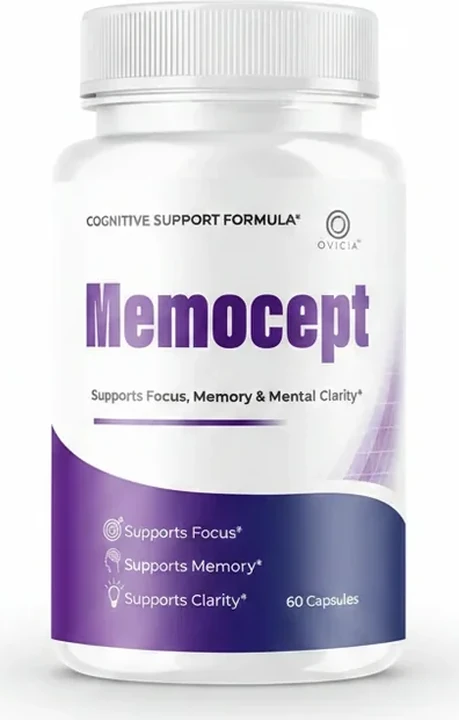
Memocept is a single capsule taken once a day, which means there is exactly one timing decision to get right: take it in the morning, with food, and keep it consistent. Its five actives — Bacopa monnieri, Huperzine-A, Rhodiola rosea, L-Tyrosine and caffeine from green coffee — are named individually rather than buried in a blend, so you can find the caffeine-bearing ingredient and do the arithmetic above for yourself.
Order NowTiming by ingredient: what actually matters and what does not
"Nootropic" is not a pharmacological category, it is a marketing one, and the ingredients inside a single capsule can have onset profiles that differ by a factor of a thousand. Caffeine acts in under an hour. Huperzine A was studied over weeks. Treating them as one substance with one dosing time is where most timing advice falls over. Here is what each one actually asks of you.
| Ingredient | Timing that matters | Why | With or without food |
|---|---|---|---|
| Caffeine (including from green coffee bean) | Early in the day; hard cut-off before bed | ~5-hour half-life; the sleep effect is dose-dependent | Either; food slows the peak and eases nausea |
| Huperzine A (from clubmoss) | Daily consistency beats clock time | No time-of-day trial exists; dementia trials used fixed twice-daily schedules over 8–16 weeks | With food |
| Panax ginseng (G115) | Dose before the demand | Effects in Reay 2010 were acute, measured 1 to 4 hours after the dose | Either |
| Bacopa monnieri | Same time every day for 8–12 weeks | Nothing acute to time; the trials are duration studies | With food — stomach upset is the common complaint |
| L-theanine | 30–60 minutes before the task | Acute effect; usually paired with caffeine | Either |
| Omega-3 DHA | Any time, as long as it is every day | Works on a months-long timescale; a single dose means nothing | With a meal containing fat |
| Citrus bergamot | No timing evidence either way | Its human trials are metabolic, not cognitive, and none tested time of day | With food |
Two rows deserve expanding. The ginseng row rests on Reay, Scholey and Kennedy (2010), a randomised, double-blind, placebo-controlled crossover study in 30 healthy young adults who took 200 mg or 400 mg of the standardised G115 extract daily for eight days, tested before dosing and at 1, 2.5 and 4 hours afterwards. The effects that showed up were acute, within that four-hour window — and the authors found "no evidence of additional benefits, nor attenuation of acute effects following repeated ingestion." That is genuinely counterintuitive: for ginseng, day eight looked much like day one. Timing the dose ahead of the demanding part of your day is therefore a defensible move in a way it simply is not for bacopa.
The huperzine A row is the opposite case. The Alzheimer's Drug Discovery Foundation's Cognitive Vitality monograph records dementia trials running 8 to 16 weeks at 0.2 to 0.4 mg a day on fixed twice-daily schedules. Nobody has run a study asking whether morning or evening is better. Reported elimination half-lives in human pharmacokinetic studies vary widely — from around five hours to fourteen depending on the formulation and the analytical method — so even the pharmacology does not hand you a clean answer. What the research design does tell you is that huperzine A was studied as something you take every day for months, which makes the missed dose a bigger problem than the wrong hour. If you want the evidence on whether it works at all, rather than when to take it, we covered that separately in our review of huperzine A, ginseng and caffeine as a combination.
The mid-afternoon crash: adenosine rebound, explained properly
Caffeine does not create energy. It blocks the signal that you are running low on it. Adenosine builds up in the brain across the waking day and binds to adenosine receptors, and that binding is a large part of what sleepiness feels like. Caffeine crosses the blood-brain barrier and antagonises all four adenosine receptor subtypes — A1, A2a, A2b and A3 — so the adenosine is still accumulating, it just cannot deliver its message.
When the caffeine clears, the receptors free up, and the adenosine that piled up during the blockade is waiting. That is the pharmacological account of the mid-afternoon slump that follows a big morning coffee, and it explains why the crash tends to feel worse than the tiredness you would have had without the caffeine at all. It is a mechanistic explanation rather than something a trial has isolated and measured directly, and it is worth labelling as such. What has been measured is the withdrawal end of the same phenomenon: Juliano and Griffiths' 2004 review in Psychopharmacology validated headache, fatigue, decreased alertness, drowsiness, difficulty concentrating and irritability as genuine caffeine-withdrawal symptoms, with onset typically 12 to 24 hours after the last dose and peak intensity at 20 to 51 hours.
The practical consequence is the opposite of what most people do. The instinct at 3pm is a second dose. The arithmetic says that second dose lands squarely inside your cut-off window and buys the afternoon at the cost of the night. Our post on L-theanine and caffeine covers the other common workaround — blunting the jitter rather than adding more stimulant.
One capsule, two timelines
Here is the structural problem with any formula that combines a stimulant and a slow-acting botanical, and it is the reason the "day or night" framing is a bad question.
The stimulant argues for early. It has a short, felt onset, a five-hour half-life and a direct line to your sleep. Every hour later you take it costs you something at bedtime.
The memory-related ingredient argues for daily. It has no acute effect to schedule around and was studied as an eight-to-sixteen-week course. What it needs from you is that you do not skip Thursdays.
Early and daily satisfies both, which is why the answer to a complicated question turns out to be boring: pick a fixed morning slot, attach it to something you already do without thinking — breakfast, the first coffee, brushing your teeth — and stop optimising. The gain from finding the theoretically perfect hour is small. The loss from a schedule you abandon in week three is total. One footnote before you plan an eight-week run: at one capsule a day, a 30-capsule bottle is exactly 30 days, so a single bottle cannot cover the 8-to-12-week window the slow ingredients were studied over. That is arithmetic, not a reason to buy more than you want.
With food or on an empty stomach?
The honest answer has two halves. For efficacy, there is no evidence either way: no trial of a nootropic ingredient has randomised people to fed versus fasted dosing and measured a cognitive difference. Anyone claiming a capsule "absorbs better on an empty stomach" is describing a mechanism, not a result.
For tolerability, food does two useful things. It slows gastric emptying, so caffeine peaks later and more gently — the total absorbed is essentially unchanged, but the spike is flatter, which for stimulant-sensitive people is the difference between alert and jittery. And it reduces the nausea concentrated botanical extracts are known for. Unless a label says otherwise, with food is the low-regret choice.
Shift workers, slow metabolisers, and everyone this advice does not fit
The cut-off table assumes a conventional day and a conventional night. Four groups need to adapt it rather than follow it.
- Shift workers should anchor the rule to their own sleep window, not the clock. If you sleep 9am to 4pm, your caffeine cut-off is around midnight. The half-life does not care what the sun is doing.
- Slow metabolisers should treat the five-hour population average as a lower bound. Reported half-lives span roughly 1.5 to 10 hours across individuals, and if a lunchtime coffee reliably costs you sleep, the average does not describe you.
- Smokers clear caffeine up to twice as fast — which also means quitting lengthens your half-life and can make a previously harmless afternoon dose suddenly disruptive.
- Pregnant or nursing people, and anyone on prescription medication — particularly cholinergic drugs, anticoagulants, diabetes or blood-pressure medication — should discuss a caffeine-containing supplement with a doctor or pharmacist before worrying about what hour to take it.
What the evidence does not show
Three limits, stated plainly, because the rest of this page is more confident than the underlying literature deserves in places.
There is no trial of nootropic timing. Not one study has randomised people to take a multi-ingredient cognitive-support capsule in the morning versus the evening and measured a cognitive difference. Everything above is assembled from caffeine pharmacokinetics, caffeine-and-sleep trials, and the dosing schedules the individual ingredient trials happened to use. That is reasonable inference. It is not direct evidence.
The sleep trials are not trials of supplements. Drake 2013 and both Gardiner papers tested caffeine at 100 mg or 400 mg in mostly young, healthy, moderate-caffeine-consuming participants — the 2025 crossover trial enrolled 23 men and no women. Applying those figures to a low-dose botanical capsule taken by a 55-year-old woman is an extrapolation. The best available one, but an extrapolation.
Timing does not rescue a formula that does not work. The evidence that any of these ingredients meaningfully improves cognition in healthy adults is mixed at best, and for several it is thin. Getting the hour right cannot manufacture an effect that is not there — and note that some genuinely promising compounds, such as creatine, cannot be delivered in a capsule at all at the doses their research used.
The point that outranks all of the above: whatever the capsule does or does not do, the sleep you would lose to a late dose is doing something measurable. Overnight sleep is when memory consolidation happens, and the evidence for that is far stronger than for any nootropic ingredient on the market — we set out that case in our post on sleep, memory consolidation and focus. Trading sleep for an evening's alertness is a bad trade for anyone whose actual goal is memory.
Frequently asked questions about nootropic timing
What is the best time of day to take a nootropic?
Morning, for most formulas. If the capsule contains caffeine — from green coffee bean, guarana, tea extract or plain caffeine anhydrous — an early dose keeps the stimulant away from your sleep window. If it contains a slow-acting ingredient such as huperzine A or bacopa, the clock time matters far less than taking it every day without gaps.
How many hours before bed should I stop taking caffeine?
A 2023 systematic review and meta-analysis in Sleep Medicine Reviews calculated that a 107 mg coffee should be finished at least 8.8 hours before bedtime, and a 217.5 mg pre-workout serving at least 13.2 hours before bedtime, to avoid measurable sleep disruption. Round 8.8 hours up to nine and you have a rule you can actually use.
Should I take a nootropic with food or on an empty stomach?
With food, unless the label says otherwise. Food slows how quickly caffeine peaks in the blood, which usually makes the onset gentler rather than weaker, and it reduces the nausea some people get from concentrated botanical extracts taken on an empty stomach. No trial has shown that food changes whether a nootropic works.
Does it matter if I take my nootropic at a different time each day?
For the caffeine, yes — a dose at 8am and a dose at 4pm are two very different propositions for your sleep. For the slow-acting ingredients, consistency matters more than the clock, because the trials that studied them dosed daily for weeks. Pick one time you will actually remember and keep it.
Can I take a nootropic at night?
Only if it contains no caffeine and no other stimulant. A caffeinated capsule taken in the evening can cut total sleep time, and lost sleep works against the overnight memory consolidation the formula is meant to support. Check the Supplement Facts panel for a caffeine line before you even consider an evening dose.
How long after taking a caffeinated nootropic will I feel it?
Caffeine is absorbed quickly and blood levels usually peak somewhere between 30 minutes and two hours after an oral dose. That first lift is the caffeine. The slower ingredients in a multi-ingredient capsule contribute nothing you can feel on day one.
What if I am a slow caffeine metaboliser?
Move your cut-off earlier by two to three hours. Caffeine is cleared almost entirely by the liver enzyme CYP1A2, and reported half-lives across individuals span roughly 1.5 to 10 hours. If coffee after lunch reliably costs you sleep, you are at the slow end and the population average does not describe you.
Does taking a nootropic later in the day help with an evening deadline?
It may make the caffeine work better that evening and make your sleep worse that night. If you have an unavoidable late demand, treat it as a deliberate one-off and accept the trade, rather than permanently moving your standing dose time.
Is there a best time of day to take huperzine A specifically?
No trial has compared morning with evening dosing of huperzine A. Dementia trials generally used fixed twice-daily schedules, which tells you consistency was designed into the research, not that any particular hour is better. Morning dosing is the conventional choice mainly because it keeps a once-daily capsule away from bedtime.
Medical note: this article is general information, not medical advice. Dietary supplements are not intended to diagnose, treat, cure or prevent any disease. Speak to a healthcare professional before starting any supplement, especially if you are pregnant or nursing, sensitive to caffeine, taking prescription medication, or managing a heart-rhythm, sleep or other health condition.
Scientific references
- Gardiner C., Weakley J., Burke L.M., et al. — The effect of caffeine on subsequent sleep: a systematic review and meta-analysis, Sleep Medicine Reviews 2023;69:101764 (PMID 36870101)
- Gardiner C.L., Weakley J., Burke L.M., et al. — Dose and timing effects of caffeine on subsequent sleep: a randomized clinical crossover trial, SLEEP 2025;48(4):zsae230
- Drake C., Roehrs T., Shambroom J., Roth T. — Caffeine effects on sleep taken 0, 3, or 6 hours before going to bed, Journal of Clinical Sleep Medicine 2013;9(11):1195–1200 (PMID 24235903)
- Evans J., Richards J.R., Battisti A.S. — Caffeine, StatPearls, NCBI Bookshelf NBK519490 (updated 2024)
- Juliano L.M., Griffiths R.R. — A critical review of caffeine withdrawal, Psychopharmacology 2004;176(1):1–29 (PMID 15448977)
- Reay J.L., Scholey A.B., Kennedy D.O. — Panax ginseng (G115) improves aspects of working memory performance and subjective ratings of calmness in healthy young adults, Human Psychopharmacology 2010;25(6):462–471 (PMID 20737519)
- Alzheimer's Drug Discovery Foundation — Cognitive Vitality monograph: Huperzine A (trial doses, durations and safety notes)
- US Food and Drug Administration — Spilling the Beans: How Much Caffeine is Too Much? (400 mg/day reference for healthy adults)
One capsule, one time, every morning
If you want the timing decision to be simple, a once-daily formula with its ingredients named openly on the label is the easiest thing to schedule — and the easiest thing to check. See what is actually in Memocept, ingredient by ingredient, before you decide anything about when to take it.
Order Now