Creatine and Cognition: What the 2024–2026 Evidence Actually Shows
Quick Answer: Does Creatine Do Anything for Your Brain?
A 2024 meta-analysis of 16 trials found a small but real effect on memory (SMD 0.31) — small enough that a well-slept omnivore who already eats meat is unlikely to notice it, and a competing 2024 review argued the evidence does not support the mechanism at all. Since then the picture has got less flattering, not more: the European Food Safety Authority concluded in November 2024 that a cause-and-effect relationship between creatine and improved cognitive function has not been established, and a 2026 commentary identified a statistical error in the meta-analysis that produced the headline number.
- Best case: a small memory effect, concentrated in older adults and people under metabolic stress.
- Dose reality: the standard 3–5 g is a muscle dose; brain creatine moved at ~20 g/day for four weeks.
- Who responds least: healthy, well-slept omnivores — probably you, if you are reading this.
- Not in your capsule: 5 g is about ten capsules, which is why creatine is a powder.

What the 2024 meta-analysis actually found
The single most-cited paper behind creatine's brain reputation is Xu, Bi, Zhang and Luo (2024), published in Frontiers in Nutrition. It pooled 16 randomised controlled trials covering 492 adults with a mean age range of 20.8 to 76.4 years, all using creatine monohydrate. These are the numbers, and as far as we can tell they appear on no consumer-facing page.
| Cognitive domain | Effect size (SMD) | 95% confidence interval | Hedges's g | Plain reading |
|---|---|---|---|---|
| Memory | 0.31 | 0.18 to 0.44 | 0.30 | Small, and the interval clears zero comfortably |
| Attention (time) | −0.31 | −0.58 to −0.03 | −0.30 | Small; the interval almost touches zero |
| Processing speed (time) | −0.51 | −1.01 to −0.01 | −0.49 | Moderate on paper, but the interval runs to the edge of nothing |
Negative values are improvements here, because attention and processing speed were measured as response times — less is faster. A standardised mean difference of 0.31 is, by convention, a small effect: the sort of difference that shows up reliably in a pooled analysis of hundreds of people and is close to invisible in one person's Tuesday.
Two 2024 reviews reached opposite conclusions
This is the part that makes the topic honest, and the part the supplement blogs omit.
| Review | Year | What it examined | Conclusion |
|---|---|---|---|
| Prokopidis et al., Nutrition Reviews | 2023 | 10 RCTs, 225 healthy people, memory outcomes | SMD 0.29 overall — but 0.88 in adults aged 66–76 and 0.03 in adults aged 11–31 |
| Xu et al., Frontiers in Nutrition | 2024 | 16 RCTs, 492 adults | Benefits for memory, attention time and processing speed |
| McMorris et al., Behavioural Brain Research | 2024 | Systematic review of brain creatine content and cognition | Creatine does raise brain content, but cognitive results are "somewhat equivocal"; the theoretical basis is not supported |
| EFSA NDA Panel, EFSA Journal | 2024 | Formal health-claim dossier under EU regulation | A cause-and-effect relationship has not been established |
| Citherlet, Frontiers in Nutrition (commentary) | 2026 | Re-examined the statistics behind Xu et al. | A unit-of-analysis error inflated precision; re-analysis needed |
McMorris and colleagues confirmed that supplementation genuinely raises creatine concentrations in the brain, then found the cognitive consequences equivocal, and argued future research must actually measure brain creatine rather than assume it changed. Their title is unusually blunt for a journal paper: creatine research "fails to support the theoretical basis for an effect on cognition."
The European Food Safety Authority's NDA Panel assessed a formal health-claim application in November 2024. It accepted that creatine is well characterised and that improved cognitive function is a genuine beneficial effect — then concluded the evidence did not establish cause and effect. Its reasoning matters: acute working-memory effects appeared at 20 g a day but not at lower doses, nor with 5 g a day for six weeks; only one of ten intervention studies showed an effect on response inhibition, at 20 g a day for seven days; and three studies in patient populations did not support an effect either.
Then in 2026, a commentary in the same journal that published the meta-analysis argued Xu et al. had treated multiple correlated subtests from the same participants as independent effect sizes — a unit-of-analysis error. In some included studies seven or more memory subtests from one sample were each counted separately, so the number of observations exceeded the number of people randomised, inflating apparent precision. Crucially, the commentary notes that when the earlier Prokopidis meta-analysis was corrected the same way, its positive findings became non-significant except in older adults. That is the most decision-relevant sentence in the literature and it is on no commercial page we could find.
Dose: the number in the tub is not the number in the studies
Almost every discussion of creatine quotes 3 to 5 grams a day. That figure comes from sports nutrition, where it is the maintenance dose that keeps muscle stores topped up after loading. The brain is a different compartment, and the doses look different.
| Protocol | What the research used | Practical reading |
|---|---|---|
| Standard maintenance | 3–5 g/day creatine monohydrate | The dose on almost every tub; a muscle dose |
| Loading phase | ~0.3 g/kg/day for 5–7 days | Fills muscle quickly; not the brain question |
| Dose that measurably raised brain creatine | ~20 g/day for 4 weeks (+8.7% total brain creatine) | Four times the usual maintenance dose |
| Lower-dose brain route | 5 g/day for at least 8 weeks | Slower and less certain; EFSA saw no effect at this dose over six weeks |
| Acute dose in sleep deprivation | 0.35 g/kg single dose (~25 g for a 70 kg adult) | A one-off research dose, not a daily plan |
The 20 g and 8.7% figures come from the "Heads Up" review by Candow and colleagues in Sports Medicine; the loading and maintenance figures from the International Society of Sports Nutrition position stand. The gap between them is the most useful thing on this page: the dose people take is not the dose shown to change brain creatine.
Who is most likely to respond — and why it is probably not you
Creatine is not exotic. Your body makes roughly half of what it needs from arginine and glycine, and the rest comes from food — about 1 to 2 grams from a pound of uncooked beef or salmon. If you eat meat and fish regularly and sleep properly, your stores are already close to saturated and there is little headroom for a supplement to fill. That is the qualifier nobody states, and it inverts the marketing: the people most likely to respond are the people least likely to be reading a nootropic blog.
- Vegetarians and vegans — little or no dietary creatine, so the largest gap to close.
- Older adults — the Prokopidis meta-analysis found a memory effect of SMD 0.88 in adults aged 66–76 against 0.03 in adults aged 11–31.
- Acutely sleep-deprived people — Gordji-Nejad et al. (2024) gave 15 healthy adults a single 0.35 g/kg dose during 21 hours of partial sleep deprivation and reported roughly 10% better word memory and faster processing, alongside measurable changes in cerebral high-energy phosphates. Note the size: 15 people, one night, one enormous dose.
- Healthy, well-slept omnivores — the group with the least to gain, and the group the advertising is aimed at.
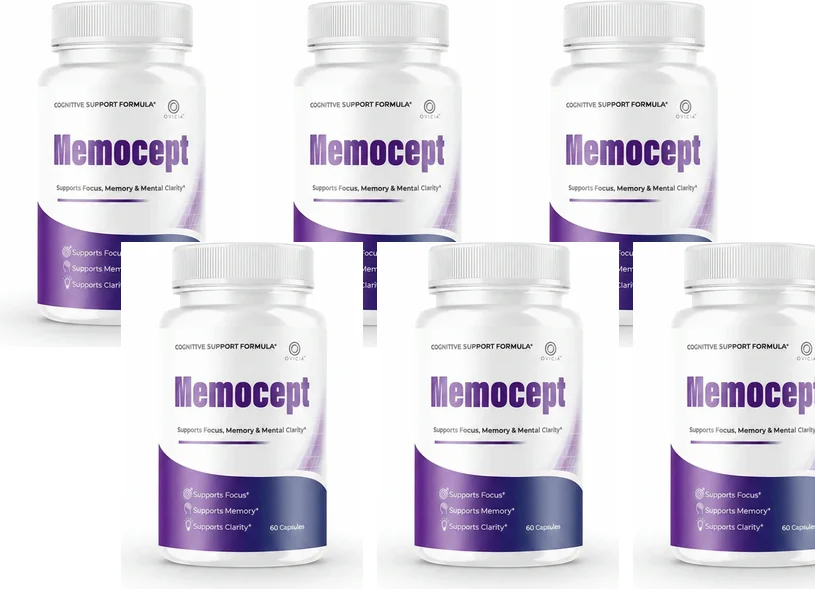
Looking for a daily cognitive-support capsule instead?
Creatine's dose problem is a formulation problem, not a scepticism problem. If you want something that does fit in one capsule a day, Memocept takes a different route — Bacopa monnieri, Huperzine-A, Rhodiola rosea, L-Tyrosine and caffeine from green coffee, all named individually rather than hidden inside a proprietary blend.
Order NowWhy creatine is not in nootropic capsules
Here is a formulation fact that explains more than any amount of ingredient debate: 5 grams of creatine is roughly ten standard capsules. A typical size 00 capsule holds around 0.5 to 0.8 grams of powder. The brain-relevant 20-gram dose would be forty capsules a day.
That is why creatine is sold as a scoop of powder and always has been. It is also why you should be suspicious of any multi-ingredient capsule listing creatine among a dozen others: whatever is in there is a fraction of a gram, orders of magnitude below anything studied. It is there for the label, not for you.
The corollary is that capsule-format nootropics have to work with compounds active in milligrams rather than grams — caffeine at tens of milligrams, huperzine A at hundredths of a milligram, standardised extracts at a few hundred. That constraint is arithmetic, not conspiracy, and it quietly determines what can be in a capsule at all. Our review of huperzine A, ginseng and caffeine covers the compounds that clear that bar. And if you do add a creatine powder alongside a capsule, timing is one fewer thing to worry about — unlike caffeine, creatine has no acute onset and no bedtime problem, which we cover in our guide to when to take a nootropic.
What the evidence does not show
Four limits, and they matter more than the headline effect size.
No regulator accepts the claim. EFSA's 2024 opinion is the clearest statement available from a body with no product to sell: cause and effect has not been established. That is not the same as "creatine does nothing" — it means the evidence submitted was not good enough.
The headline meta-analysis is under methodological challenge. The 2026 unit-of-analysis critique is technical but consequential, and EFSA independently flagged the same concern. Until a corrected re-analysis appears, SMD 0.31 is a provisional figure, not a settled one.
The trials are small and short. 492 participants across 16 trials averages about 31 people per study; the sleep-deprivation study everyone quotes had 15. These are pilot-scale samples, and small studies systematically overstate effects.
Early clinical work is not evidence for you. Small feasibility studies giving creatine to people with diagnosed cognitive conditions have had press coverage. Those are early-stage studies in patient populations, run to see whether a larger trial is feasible. They are not evidence that creatine treats, prevents or slows anything, they say nothing about healthy adults, and a dietary supplement is not a treatment for any disease.
The unglamorous version: creatine is cheap, well tolerated, genuinely useful for muscle, and its cognitive case rests on small effects in populations that are mostly not you. The highest-confidence lever on your own memory remains the one nobody is selling — sleep and memory consolidation — followed some way behind by omega-3 DHA, which at least has a long-duration trial base.
Safety and who should be careful
Creatine monohydrate is among the more thoroughly studied supplement ingredients and is generally well tolerated in healthy adults at standard doses. Three practical points. It raises serum creatinine, a routine blood marker used to estimate kidney function — this reflects the supplement, not kidney damage, but it produces a confusing result, so tell your doctor you take it before a blood test. Anyone with existing kidney disease, or on medication affecting the kidneys, should ask a clinician first. And high single doses, particularly during loading, commonly cause bloating and gastrointestinal upset.
Frequently asked questions about creatine and cognition
Does creatine improve memory in healthy adults?
Slightly, on average, and the finding is contested. A 2024 meta-analysis of 16 randomised trials in 492 adults reported a small effect on memory (SMD 0.31, 95% CI 0.18 to 0.44). But a 2024 systematic review concluded the evidence does not support the theoretical basis for a cognitive effect, the European Food Safety Authority ruled in 2024 that cause and effect had not been established, and a 2026 commentary argued the meta-analysis double-counted outcomes from the same participants. Treat it as unresolved.
How much creatine do you need for a brain effect?
More than the standard dose. The usual maintenance dose is 3 to 5 grams a day, which is a muscle dose. The studies that measurably raised brain creatine used around 20 grams a day for four weeks, which produced an increase of about 8.7% in total brain creatine, or 5 grams a day for at least eight weeks. Nobody has established a dose that reliably produces a cognitive change in healthy adults.
Why is creatine not in nootropic capsules?
Because it does not fit. A 5 gram dose is roughly ten standard capsules, and the brain-relevant doses in the research are four times that. Creatine is sold as a powder for a physical reason, not a marketing one. Any capsule product listing creatine among a dozen other ingredients is delivering a fraction of a gram, which is well below anything that has been studied.
Who is most likely to notice a cognitive effect from creatine?
People whose brain creatine is furthest from saturation. That means vegetarians and vegans, who get little or no creatine from food, older adults, and people who are acutely sleep deprived. A 2023 meta-analysis found the memory effect was much larger in adults aged 66 to 76 (SMD 0.88) than in adults aged 11 to 31 (SMD 0.03). A healthy, well-slept omnivore who eats meat and fish is the least likely person to notice anything.
Is creatine safe for your kidneys?
In healthy adults, long-term studies have not found harm to kidney function at standard doses. Two caveats matter. Creatine raises serum creatinine, a routine blood marker of kidney function, without indicating damage, so tell your doctor you take it before any blood test. And anyone with existing kidney disease, or taking medication that affects the kidneys, should ask a clinician before starting.
Medical note: this article is general information, not medical advice. Dietary supplements are not intended to diagnose, treat, cure or prevent any disease. Speak to a healthcare professional before starting any supplement, especially if you are pregnant or nursing, have kidney disease, take prescription medication, or are concerned about memory changes — persistent or worsening memory problems are a reason to see a clinician, not to self-treat.
Scientific references
- Xu C., Bi S., Zhang W., Luo L. — The effects of creatine supplementation on cognitive function in adults: a systematic review and meta-analysis, Frontiers in Nutrition 2024;11:1424972 (PMID 39070254)
- McMorris T., Hale B.J., Pine B.S., Williams T.B. — Creatine supplementation research fails to support the theoretical basis for an effect on cognition, Behavioural Brain Research 2024;466:114982 (PMID 38582412)
- EFSA Panel on Nutrition, Novel Foods and Food Allergens — Creatine and improvement in cognitive function: evaluation of a health claim, EFSA Journal 2024;22(11):e9100 (PMID 39564533)
- Citherlet T. — Commentary: The effects of creatine supplementation on cognitive function in adults, Frontiers in Nutrition 2026 (unit-of-analysis critique)
- Prokopidis K., Giannos P., Triantafyllidis K.K., et al. — Effects of creatine supplementation on memory in healthy individuals: a systematic review and meta-analysis of RCTs, Nutrition Reviews 2023;81(4):416–427 (PMID 35984306)
- Candow D.G., Forbes S.C., Ostojic S.M., et al. — "Heads Up" for creatine supplementation and its potential applications for brain health and function, Sports Medicine 2023;53(Suppl 1):49–65 (PMID 37368234)
- Gordji-Nejad A., et al. — Single dose creatine improves cognitive performance and induces changes in cerebral high energy phosphates during sleep deprivation, Scientific Reports 2024;14:4937 (PMID 38418482)
- Kreider R.B., et al. — International Society of Sports Nutrition position stand: safety and efficacy of creatine supplementation, Journal of the International Society of Sports Nutrition 2017;14:18
- Eckert I. — Creatine supplementation for cognition: a critical perspective on promise, proof, and public perception, The Journal of Nutrition 2025;155(10):3143–3147 (PMID 40744234)
Five named ingredients, one capsule a day
Memocept does not contain creatine — nothing in a capsule sensibly could. What it does contain is listed openly, with the evidence for each ingredient set out honestly. See the full ingredient breakdown before you decide.
Order Now