Omega-3 DHA and Brain Health: What the Cognition Evidence Actually Shows
Quick Answer: Does Omega-3 DHA Actually Help Your Brain?
DHA is genuinely important, but the marketing runs ahead of the evidence. DHA (docosahexaenoic acid) is the main structural omega-3 fatty acid in the brain and retina, so getting enough of it matters for normal brain function across life. The strongest case for supplementing is correcting a genuinely low intake — if you eat little or no oily fish, adding DHA plausibly helps. In already-healthy, well-nourished adults, however, large trials and Cochrane reviews have found the cognitive benefits of extra DHA to be modest at best, and often not significant. It is a foundational nutrient worth getting enough of, not a proven memory pill, and any effect builds over months, not minutes.
- Strongest case: correcting low intake, especially if you rarely eat oily fish.
- Dose that matters: around 250–500 mg EPA+DHA daily for general health; check the DHA milligrams on the label.
- Key caveat: support for a healthy diet, not a treatment — see a clinician for genuine memory concerns.

DHA's role: a structural brick, not a stimulant
Unlike caffeine or a classic stimulant, DHA does not give you a noticeable lift. Its job is structural. DHA is the most abundant omega-3 fatty acid in the brain, concentrated in the membranes of neurons and in the retina of the eye, where it influences membrane fluidity, cell signalling and the environment nerve cells work in. Because the body cannot make omega-3 fats efficiently from scratch, you have to get them from the diet. That biology is real and uncontroversial — and it is exactly why DHA gets marketed as brain food. The leap that deserves scrutiny is the next one: that adding more DHA on top of an adequate intake reliably makes a healthy adult think faster or remember more.
The cognition trials: what the human data shows
This is where honesty matters. When researchers pool the randomised trials, the picture is underwhelming for healthy people. A Cochrane review of omega-3 supplements for preventing cognitive decline in cognitively healthy older adults found no convincing benefit for memory or thinking over the periods studied. A separate Cochrane review of omega-3 for the treatment of established dementia also failed to find a meaningful benefit. Some observational studies do link higher fish and omega-3 intake with slower cognitive ageing, but observational data cannot separate the fish from the healthier lifestyles that often come with it. The most defensible reading is that DHA is a nutrient you should not be deficient in, and that topping up a diet already rich in it produces small and inconsistent cognitive effects at best.
What the evidence supports, in one table
| Scenario | What the research supports |
|---|---|
| Low dietary omega-3 intake | Clearest case for benefit — correcting a shortfall in a structural nutrient |
| Healthy, well-nourished adults | Modest and inconsistent cognitive effects in trials |
| Preventing cognitive decline | Cochrane review found no convincing benefit in healthy older people |
| Treating established dementia | Cochrane review found no meaningful benefit |
| General brain and eye maintenance | Recognised structural role; adequacy matters throughout life |
Dosing: read the DHA number, not the capsule size
There is no established therapeutic dose of DHA for cognition, which is itself a telling detail. For general health, guidance often points to a combined EPA plus DHA intake of roughly 250 to 500 mg per day — about what two servings of oily fish per week delivers. Many cognition studies used considerably more, in the region of 800 to 900 mg of DHA daily. The practical trap is the label: a large fish-oil softgel advertised as "1000 mg" often contains only a few hundred milligrams of actual EPA and DHA combined, and less DHA specifically. Always read the DHA milligrams per serving rather than the total oil weight, and treat very high doses as something to discuss with a clinician rather than self-prescribe.
Diet versus supplement: fish first, capsule to fill a gap
For most people, food is the better-supported route. Oily fish — salmon, sardines, mackerel, herring, trout — is the form used in the diet studies, and it arrives alongside protein, vitamin D and other nutrients rather than in isolation. If you eat fish a couple of times a week, you are likely already getting a reasonable DHA intake and have little to gain from a supplement. Supplements earn their place when there is a genuine gap: if you rarely or never eat fish, an omega-3 capsule — or an algae-derived DHA product for vegetarians and vegans, since algae is where fish get their DHA in the first place — is a sensible way to close it. Think of the capsule as insurance against a shortfall, not an upgrade over a good diet.
Where the evidence stops
Two limitations are worth stating plainly. First, "omega-3 is essential for the brain" and "an omega-3 supplement will improve your brain" are different claims; the first is settled nutrition, the second is not well supported in healthy, adequately fed adults. Do not let the strength of the first sell you the second. Second, none of this treats a cognitive disease. If you are experiencing genuine memory loss, confusion or persistent brain fog, that is a medical situation and a fish-oil capsule is not the answer — a clinician is. DHA is a foundation to build on with diet, sleep, exercise and blood-pressure control, not a substitute for any of them.
EPA versus DHA: which one for what
Fish oil is not one ingredient. The two long-chain omega-3s that matter are EPA and DHA, they behave differently, and the ratio between them varies enormously between products. DHA is the structural one: it is physically incorporated into neuronal membranes and is the fatty acid most associated with brain tissue composition. EPA is more associated with the inflammatory-signalling side of omega-3 biology and has more of the mood research behind it.
For memory specifically, a meta-analysis of DHA and adult memory found benefit concentrated in older adults with mild memory complaints rather than in healthy young ones (Yurko-Mauro et al., PLoS One, 2015), and a broader review of long-chain omega-3s and cognitive decline in non-demented adults reached a cautious conclusion about the size of the effect (Alex et al., Nutrition Reviews, 2020). Interestingly, one randomised trial in healthy young adults found improved global cognitive function from an EPA-rich oil but not from a DHA-rich one (Patan et al., American Journal of Clinical Nutrition, 2021), a useful reminder that “omega-3” is too coarse a label to make predictions from.
How to read an omega-3 label
The number on the front of the bottle is almost always the weight of the fish oil, not the weight of the omega-3s in it. A “1,000 mg fish oil” softgel commonly contains only about 300 mg of EPA plus DHA combined, so a trial dose of one gram of combined EPA and DHA can require three or four of them. Turn the bottle over, find the EPA and DHA figures on the supplement facts panel, add them together, and compare that total against the studies — the same back-of-pack discipline our guide to reading a nootropic supplement label applies to every other ingredient. Triglyceride and ethyl ester forms both work; the more relevant practical variables are the EPA-plus-DHA total, freshness (rancid oil smells and tastes of it) and whether you can take it consistently.
Where omega-3 fits alongside other cognitive ingredients
Omega-3 is a foundation nutrient rather than a performance ingredient, which puts it in a different category from anything you would feel. That makes it a natural partner for the other structural and lifestyle inputs rather than for stimulants: the membrane-phospholipid story it shares with phosphatidylserine and memory, and the dietary-pattern evidence in our guide to diet, exercise and hydration for everyday focus, where oily fish appears as food rather than as a capsule. If your interest is in the metabolic and lipid side of cognitive health, the same caution applies to citrus bergamot and cognition, where the evidence is mostly about blood lipids rather than thinking.
Frequently asked questions
Does omega-3 DHA improve memory in healthy adults?
The honest answer is modest and mixed. DHA is a major structural fatty acid in the brain, and the clearest case for supplementing is correcting a genuinely low intake. In already well-nourished, cognitively healthy adults, large trials and Cochrane reviews have generally found little to no reliable benefit for memory or preventing cognitive decline. It is a nutrient worth getting enough of, not a proven memory booster.
How much DHA should I take for brain health?
There is no established therapeutic dose for cognition. General health guidance often points to a combined EPA plus DHA intake in the region of 250 to 500 mg per day, roughly what two servings of oily fish per week provides, while many cognition studies used higher amounts such as 800 to 900 mg of DHA daily. Check the actual DHA milligrams on any label, since a large fish-oil capsule can contain surprisingly little DHA.
Is eating fish better than taking a DHA supplement?
For most people, oily fish such as salmon, sardines or mackerel is the best-supported source, because that is the form used in the diet studies and it comes with other nutrients. Supplements, including algae-based DHA for vegetarians and vegans, are a reasonable way to close a gap if you do not eat fish, but they are a top-up rather than a guaranteed upgrade over a good diet.
Is DHA safe, and can it interact with medication?
Omega-3 supplements are generally well tolerated, with mild effects such as a fishy aftertaste or digestive upset being the most common. At higher doses they can have a mild blood-thinning effect, so if you take anticoagulant or antiplatelet medication, or have a bleeding disorder or an upcoming surgery, discuss it with your doctor first.
Medical note: this article is general information, not medical advice. Speak to a healthcare professional before starting any supplement, especially if you take anticoagulant or antiplatelet medication, have a bleeding disorder, are pregnant or nursing, or have surgery scheduled — high-dose omega-3 can have a mild blood-thinning effect.
Scientific references
- NIH Office of Dietary Supplements — Omega-3 Fatty Acids: Fact Sheet for Health Professionals
- NIH NCCIH — Omega-3 Supplements: In Depth
- Sydenham E. et al. — Omega 3 fatty acid for the prevention of cognitive decline and dementia, Cochrane Database of Systematic Reviews
- Burckhardt M. et al. — Omega-3 fatty acids for the treatment of dementia, Cochrane Database of Systematic Reviews
- Yurko-Mauro K, Alexander DD, Van Elswyk ME — Docosahexaenoic acid and adult memory: a systematic review and meta-analysis, PLoS One 2015;10(3):e0120391 (PMID 25786262)
- Alex A, Abbott KA, McEvoy M, Schofield PW, Garg ML — Long-chain omega-3 polyunsaturated fatty acids and cognitive decline in non-demented adults: a systematic review and meta-analysis, Nutr Rev 2020;78(7):563–578 (PMID 31841161)
- Külzow N, Witte AV, Kerti L, Grittner U, et al. — Impact of omega-3 fatty acid supplementation on memory functions in healthy older adults, J Alzheimers Dis 2016;51(3):713–725 (PMID 26890759)
Looking at your daily cognitive-support routine?
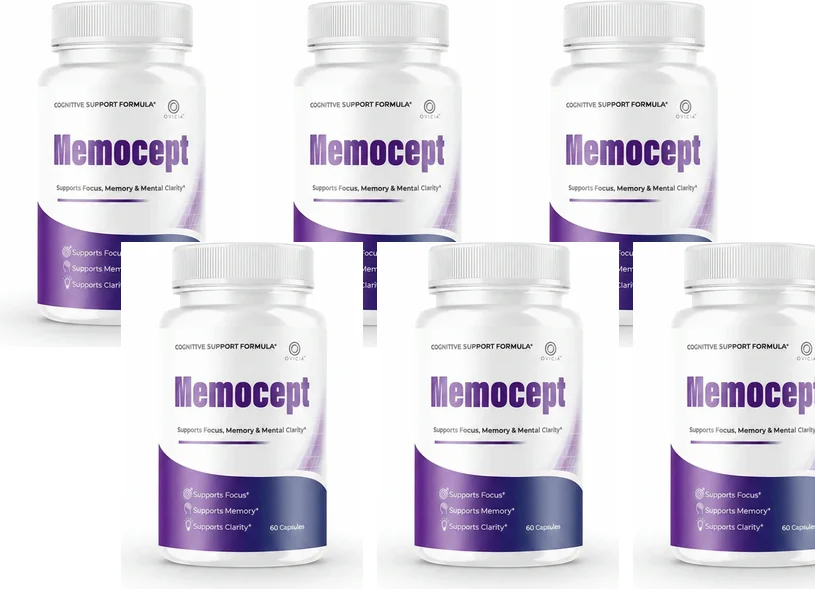
A good diet does the heavy lifting — but if you want to see how Memocept approaches focus, memory and mental clarity in a single daily capsule, with every ingredient and its evidence laid out, take a look.
Order Now