Diet and Exercise for Focus: The Everyday Foundations of Mental Clarity
Quick Answer: What Actually Sharpens Everyday Focus?
The unglamorous basics win. Aerobic exercise, adequate hydration and a whole-food diet have some of the strongest human evidence for supporting attention, processing speed and mental clarity — stronger, honestly, than any nootropic capsule. Exercise raises BDNF and blood flow to the brain; even mild dehydration measurably drags on concentration; and dietary patterns like the Mediterranean and MIND diets are linked to slower cognitive decline. A supplement is the thing that sits on top of these foundations, not a substitute for them. If you fix sleep, movement, water and food first, you have already done the part with the best evidence behind it.
- Strongest lever: regular aerobic exercise for attention and executive function.
- Cheapest win: steady hydration — even 1–2% dehydration hurts focus.
- Key caveat: a supplement adds to good habits, it does not replace them.

Exercise, BDNF and attention: the strongest evidence in the room
If one habit deserves the "smart" label, it is movement. Randomised trials and large reviews consistently link regular aerobic exercise to better attention, faster processing speed and stronger executive function — the mental gears you use to plan, switch tasks and resist distraction. A well-known trial found that a year of moderate aerobic exercise actually increased hippocampal volume and improved memory in older adults. Part of the mechanism is brain-derived neurotrophic factor (BDNF), a protein that supports the growth and survival of neurons and rises with exercise, alongside simple improvements in blood flow and sleep quality. Some of the alertness benefit shows up the same day; the deeper cognitive gains accumulate over weeks of staying consistent.
Hydration and cognition: the cheapest focus upgrade there is
Your brain is mostly water, and it is surprisingly sensitive to running low. Controlled studies show that even mild dehydration — around one to two percent of body weight, the kind you can reach on a busy day without noticing — can impair attention, short-term memory and mood, and make mental tasks feel more effortful. The fix is almost comically simple: drink water steadily through the day rather than waiting for thirst, and remember that caffeine, alcohol and hot weather all raise your needs. This is the one intervention on this page with essentially no cost and no downside.
Diet patterns: Mediterranean, MIND and whole foods
Individual "brain foods" are mostly marketing, but overall eating patterns hold up better. The Mediterranean diet — heavy on vegetables, fruit, legumes, whole grains, fish and olive oil, light on red and processed meat — is associated in observational research with slower cognitive decline. The MIND diet, a hybrid of Mediterranean and DASH designed specifically with the brain in mind, adds an emphasis on leafy greens and berries and has been linked to reduced incidence of cognitive decline in cohort studies. These are correlations, not proof, and healthier eaters differ in many ways. Still, the direction is consistent, the same pattern is good for your heart, and stable blood sugar from whole foods beats the crash that follows a sugary snack.
The foundations at a glance
| Habit | What the research supports |
|---|---|
| Aerobic exercise | Strong evidence for attention, executive function and memory; linked to raised BDNF |
| Hydration | Even mild dehydration impairs attention, memory and mood |
| Mediterranean / MIND diet | Observational links to slower cognitive decline |
| Caffeine timing | Reliable short-term alertness; late doses harm the sleep that focus depends on |
| Nootropic supplement | Modest, mixed evidence; an addition on top, not a foundation |
Caffeine timing: a real tool, easy to misuse
Caffeine genuinely improves alertness, vigilance and reaction time in the short term, which is why it belongs in this conversation. The catch is timing. Caffeine has a half-life of several hours, so a mid-afternoon coffee can still be circulating at bedtime, eroding the deep sleep that next-day focus quietly depends on. A practical rule many people find useful is to keep caffeine to the earlier part of the day and to count all sources — coffee, tea, energy drinks and any caffeinated supplement — toward the same daily total. Used early it is a lever; used late it borrows from tomorrow.
How a supplement actually fits — and where the evidence stops
Here is the honest hierarchy. Sleep, exercise, hydration and diet are the foundation, and their evidence is far stronger than anything on a supplement label. A nootropic capsule — the kind that pairs botanicals like clubmoss and Panax ginseng with green coffee caffeine — is at most a modest addition placed on top of those habits, useful only once the basics are in place. It is not a shortcut around them, and it is not a treatment for any cognitive disease. Two limits are worth stating plainly: observational diet studies show association, not cause; and a finished multi-ingredient product is not the same as any single studied dose. If you are dealing with genuine memory loss, confusion or persistent brain fog, that is a matter for a clinician, not a capsule.
How much exercise, and what kind
Exercise has the strongest evidence of anything on this page, and the useful question is not whether it helps but how much is enough. An umbrella review pooling the meta-analytic literature found benefits for cognition, memory and executive function across a wide range of exercise types and populations (Singh et al., British Journal of Sports Medicine, 2025), and the effects appear at ordinary doses rather than athletic ones. The most-quoted mechanism is neurotrophic: exercise raises brain-derived neurotrophic factor, a growth factor involved in synaptic plasticity, an effect confirmed across trials in a meta-analysis (Szuhany et al., Journal of Psychiatric Research, 2015).
Practically, that means moderate aerobic activity most days — brisk walking counts — plus some resistance work, is the version supported by the evidence. It also means an acute effect is available: a single bout of moderate exercise tends to sharpen attention for a period afterwards, which is why a walk beats a third coffee when concentration flags mid-afternoon. If you are also using a supplement, exercise is the confound that most often explains an apparent improvement, so factor it into any personal test of the kind described in how to tell if a nootropic is working. Creatine sits in an interesting middle position here, with a cognitive literature of its own set out in creatine and cognition.
Hydration: what mild dehydration actually costs
The hydration evidence is less dramatic than the marketing but more useful than most people assume. Controlled studies of mild fluid loss — the level you reach on an ordinary busy day without deliberate drinking, not clinical dehydration — report measurable effects on mood, perceived effort and some attention measures, with a meta-analysis of rehydration after fluid loss finding recovery of cognitive performance once fluid was replaced (McCartney et al., Sports Medicine Open, 2017). The honest summary is that dehydration reliably makes you feel worse and somewhat less sharp; drinking water when already well hydrated does not make you smarter.
There is no magic number of glasses. Thirst plus urine colour is a good enough guide for most healthy adults, and the practical wins are unglamorous: a glass of water with each meal, one alongside coffee, and one before a long task. Because tiredness, hunger, dehydration and stress all produce the same foggy sensation, working through the differential in our guide to brain fog causes and evidence-based fixes is usually more productive than adding another capsule, and none of it works if sleep and memory consolidation are being neglected underneath.
Frequently asked questions
Does exercise really improve focus and mental clarity?
Yes, this is one of the better-supported claims in the whole field. Regular aerobic exercise is repeatedly linked in human trials to improved attention, processing speed and executive function, with mechanisms that include increased BDNF and better blood flow to the brain. Effects on same-day alertness can appear quickly, while broader cognitive benefits build over weeks of consistent activity.
How much does dehydration affect concentration?
Noticeably. Studies show that even mild dehydration, on the order of one to two percent of body weight, can impair attention, short-term memory and mood, and increase perceived effort on mental tasks. For most people the practical fix is simple and free: drink water across the day rather than waiting until you feel thirsty.
What is the MIND diet and does it help the brain?
The MIND diet combines elements of the Mediterranean and DASH diets, emphasising vegetables, berries, whole grains, nuts, fish and olive oil while limiting red meat, fried food and sweets. Observational research has associated closer adherence with slower cognitive decline, though these are correlations rather than proof, and diet works best alongside exercise and sleep.
Can a supplement replace diet, exercise and hydration?
No. The evidence for aerobic exercise, adequate hydration and a whole-food diet is far stronger than for any nootropic capsule. A supplement is at most a small addition on top of those foundations, not a substitute for them, and it does not treat any cognitive disease.
Medical note: this article is general information, not medical advice. Speak to a healthcare professional before making major changes to your diet or exercise routine, or before starting any supplement — especially if you are pregnant or nursing, take prescription medication, or manage a heart, kidney or metabolic condition.
Scientific references
- Erickson K.I. et al. — Exercise training increases size of hippocampus and improves memory, PNAS
- Ganio M.S. et al. — Mild dehydration impairs cognitive performance and mood of men, British Journal of Nutrition
- Morris M.C. et al. — MIND diet associated with reduced incidence of Alzheimer's disease, Alzheimer's & Dementia
- NIH National Institute on Aging — Cognitive Health and Older Adults
- NIH NCCIH — Caffeine and health
- Singh B, Bennett H, Miatke A, Dumuid D, et al. — Effectiveness of exercise for improving cognition, memory and executive function: a systematic umbrella review and meta-meta-analysis, Br J Sports Med 2025 (PMID 40049759)
- Szuhany KL, Bugatti M, Otto MW — A meta-analytic review of the effects of exercise on brain-derived neurotrophic factor, J Psychiatr Res 2015;60:56–64 (PMID 25455510)
- McCartney D, Desbrow B, Irwin C — The effect of fluid intake following dehydration on subsequent athletic and cognitive performance: a systematic review and meta-analysis, Sports Med Open 2017;3(1):13 (PMID 28316054)
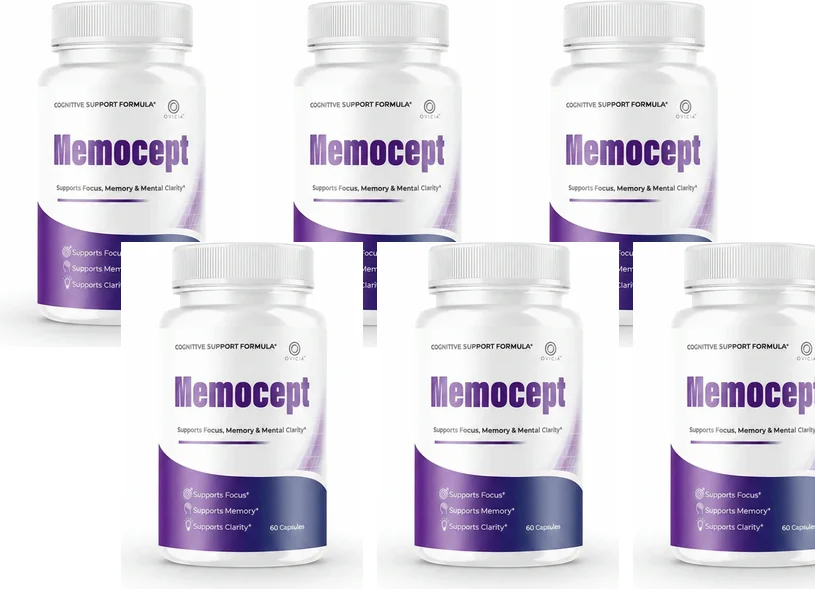
Got the basics down? See where a supplement fits
Once sleep, movement, water and diet are in place, Memocept adds Bacopa monnieri, Huperzine-A, Rhodiola rosea, L-Tyrosine and caffeine from green coffee in one daily capsule — with every named ingredient and its evidence laid out.
Order Now