Branded Nootropic Ingredients Explained: Cereboost, Sabroxy, Cognatiq and the Rest
Quick Answer: What Is a Branded Nootropic Ingredient?
A branded nootropic ingredient is an ordinary plant extract or compound that a supplier has standardised to a fixed specification and sold under a trademark — Cereboost, Sabroxy and Cognatiq are three you will meet on labels. The trademark is a manufacturing claim, not a regulatory approval and not a verdict on effectiveness, and it usually rests on one or two company-funded trials. Branded ingredients are more consistent than generic botanical powders, but no more proven. Centrophenoxine and J-147 sit in a different category entirely: one is an unapproved drug, the other an experimental compound with no published human cognitive trials.
- What a trademark buys you: a repeatable extract specification, not proof of benefit.
- Typical evidence depth: one or two randomised trials, often industry-funded, rarely replicated.
- The line to watch: standardised botanical extracts on one side, unapproved drugs on the other.

What a branded nootropic ingredient actually is
A branded nootropic ingredient is a raw material with a trademark attached by the company that makes it. Underneath the trademark there is almost always a familiar plant: Cereboost is American ginseng, Sabroxy is the bark of an Indian tree, Cognatiq comes from the coffee cherry. What the supplier sells is a specification — this species, this plant part, this extraction method, this percentage of a named marker compound, batch after batch.
That specification matters. Botanical potency varies with growing conditions, harvest timing and solvent, so two capsules labelled with the same herb can contain very different amounts of the active constituents; a branded extract removes that variability, which is why research groups prefer them. It is worth reading a nootropic supplement label for standardisation percentages rather than brand names alone. What a trademark does not do is confer approval: it is registered with a trademark office, not a health authority, and “clinically studied ingredient” means a study exists, not that it was large, independent, replicated or positive.
What does “nootropic blend” mean on a supplement label?
A nootropic blend is simply a group of ingredients listed together under one heading on the supplement facts panel. The phrase carries no legal definition and no minimum standard; what it does reveal is how the manufacturer has chosen to disclose doses, and that distinction is the most useful thing to learn about label reading.
Proprietary blend versus open-label blend
In a proprietary blend, the panel gives one total weight for the whole group and lists the ingredients in descending order without individual doses. That is legal, but it hides the composition: most of the total can be one cheap bulk botanical, with the ingredients you wanted split between what is left. In an open-label blend, every ingredient carries its own milligram or microgram figure, so you can hold each against the dose used in the published trials. When doses are hidden behind a proprietary total you can verify nothing, and the safe assumption is that the studied ingredients are present at the smallest amount that still lets them appear on the label.
The word “nootropic” itself is looser than most people expect: coined in the pharmacology literature for compounds meeting a narrow set of criteria, in retail it now covers anything from caffeine to a mushroom powder. Treating it as a marketing category rather than a pharmacological class saves a lot of disappointment — a point covered in our guide to nootropic myths versus what the research shows.
Cereboost: American ginseng standardised for ginsenosides
Cereboost is a branded extract of American ginseng, Panax quinquefolius, standardised to a fixed ginsenoside profile. It is a different species from the Asian ginseng, Panax ginseng, in most traditional formulas, and the ginsenoside mix differs between them, so the two are not interchangeable.
The evidence most often cited for it is a randomised, placebo-controlled trial in healthy young adults examining acute effects on the day of dosing and chronic effects after repeated use, across mood and several cognitive domains (Bell et al., European Journal of Nutrition, 2022). That is a reasonable piece of work, but it is one trial. Zoom out and the ginseng literature is less flattering: a Cochrane review of ginseng for cognition found no convincing evidence of benefit (Geng et al., Cochrane Database of Systematic Reviews, 2010), and a more recent meta-analysis of ginseng and cognitive function remains cautious (Zeng et al., Phytotherapy Research, 2024). The branded material is the same plant with tighter quality control, and the ceiling is set by the plant, not the trademark — the same lesson the large standardised-extract trials of Ginkgo biloba and brain blood flow taught the category — our guide to huperzine A, ginseng and caffeine covers that evidence in more detail.
Sabroxy: Oroxylum indicum standardised to oroxylin A
Sabroxy is a branded extract of the bark of Oroxylum indicum, a tree used in traditional Indian medicine, standardised to the flavonoid oroxylin A. Its mechanism is the part most searches ask about: preclinical work describes oroxylin A as an antioxidant with activity at neurotransmitter receptors and effects on neurotrophic signalling in cell and animal models. That is a hypothesis, and it lives almost entirely in the laboratory.
The human record is one randomised, double-blind, placebo-controlled trial in adults with self-reported mild cognitive impairment, reporting improvement on some memory measures over eight weeks (Lopresti et al., Frontiers in Aging Neuroscience, 2021). A single trial in a self-selected population is a starting point and nothing more. Until an independent group repeats it, the honest description of Sabroxy is “one promising trial, not yet replicated” — roughly where lion’s mane and cognition sits too.
Cognatiq and whole coffee fruit extract: a biomarker story
Cognatiq is a branded whole coffee fruit extract — made from the fruit surrounding the coffee bean rather than the roasted bean itself. The human data usually quoted for coffee fruit extract is a small study reporting a rise in plasma brain-derived neurotrophic factor, or BDNF, after a single dose in healthy subjects (Reyes-Izquierdo et al., British Journal of Nutrition, 2013).
This is where nootropic marketing quietly changes the subject. BDNF measured in blood is a biomarker, not a cognitive outcome. The questions that follow — whether the change reflects anything happening in the brain, whether it persists beyond a single dose, and whether anyone concentrates measurably better as a result — are the expensive ones, and for coffee fruit extract they are largely unanswered. If your interest in coffee fruit is really an interest in caffeine, read our breakdown of green coffee bean caffeine and chlorogenic acid instead, where the dose is at least knowable.
Centrophenoxine: an unapproved drug, not a dietary ingredient
Centrophenoxine, also written meclofenoxate, is not a botanical extract but a synthetic compound developed decades ago as a pharmaceutical, and in the United States it is an unapproved drug rather than a lawful dietary ingredient. It nonetheless turns up in products marketed as cognitive-enhancement supplements: an analysis in Clinical Toxicology identified it in supplements sold to consumers (Cohen et al., Clinical Toxicology, 2022), and a broader review documented the recurring presence of unauthorised drug ingredients across the “nootropic” supplement category (Jędrejko et al., Drug Testing and Analysis, 2023).
The practical point is blunt: if a capsule contains an unapproved drug you are self-prescribing a pharmaceutical with no verified dose, no interaction check and no monitoring — often without knowing, because the label may not say so. That belongs in the same conversation as nootropic drug interactions and who should avoid them.
J-147: an experimental compound with no human cognitive trials
J-147 is a synthetic molecule derived from curcumin, developed in academic drug-discovery work as a candidate for age-related neurodegeneration. It has a genuine research literature: it was selected by screening for neurogenic and neuroprotective activity (Prior et al., Alzheimer’s & Dementia, 2016), and later work identified a mitochondrial target for it (Goldberg et al., Aging Cell, 2018).
All of that is preclinical — cells and rodents. There is no published randomised trial showing that J-147 improves memory or focus in humans, and it is neither an approved medicine nor a lawful supplement ingredient. Searching “J-147 benefits” returns descriptions of what it did in mice, which nobody can responsibly transfer to a person.
Apoaequorin (Prevagen): what the evidence shows and what it does not
Apoaequorin is a calcium-binding protein originally isolated from a jellyfish, sold most visibly in the memory supplement Prevagen. Its published human evidence rests largely on one company-run trial in a low-circulation journal (Moran et al., Advances in Mind-Body Medicine, 2016). That trial did not show a benefit on its pre-specified primary outcomes across the whole study population; the favourable numbers came from smaller subgroups analysed after the fact, the weakest form of trial evidence and the easiest to produce by chance.
Independent reviewers of over-the-counter memory supplements reach the same cautious conclusion about the category, apoaequorin included (Hersant and Grossberg, CNS Drugs, 2023). There is a mechanistic objection too: apoaequorin is a protein, and dietary protein is broken down into amino acids during digestion, so the idea that an intact jellyfish protein reaches human brain cells after a capsule is not established. On interactions there is simply no reliable published data — which is not the same as safety.
How the branded ingredients compare, in one table
| Ingredient | What it is | Strength of human evidence |
|---|---|---|
| Cereboost | Branded American ginseng (Panax quinquefolius) extract | One randomised trial in healthy adults; wider ginseng reviews unconvinced |
| Sabroxy | Branded Oroxylum indicum bark extract, oroxylin A | One randomised trial in self-reported mild cognitive impairment; not replicated |
| Cognatiq | Branded whole coffee fruit extract | Small biomarker (BDNF) study; cognitive outcomes largely untested |
| Centrophenoxine | Synthetic compound; unapproved drug in the US | Not a lawful dietary ingredient; found in supplements by analytical surveys |
| J-147 | Experimental drug candidate derived from curcumin | Preclinical only — no published human cognitive trials |
| Apoaequorin | Jellyfish-derived protein sold as Prevagen | One company trial, primary outcomes not met; independent reviews sceptical |
Branded stacks: how to judge a multi-ingredient product
Alongside branded raw materials there are branded finished products — multi-ingredient stacks sold under a single name, of which Nooceptin is one that comes up frequently in searches. The method for judging them is identical and has nothing to do with the brand. Does the label disclose a dose for every active, or hide them in a proprietary total? Is each dose in the range the human trials actually used, or a fraction of it? Has the finished product itself been tested, or is the evidence borrowed from the individual ingredients? And is anything on the list something you should not combine with your medication? A stack of eight ingredients at token doses is weaker than three at studied doses — the logic our walkthrough of how to build a nootropic stack safely applies to combinations you assemble yourself.
Five mistakes people make buying by branded ingredient name
Treating a trademark as an approval. A registered name means a company owns the term, nothing more. Reading “clinically studied” as “clinically proven”. One industry-funded trial is a study; proof takes replication. Assuming the product inherits the trial. A trial at a specific dose does not test the capsule you bought. Ignoring the species. American and Asian ginseng are different plants with different evidence. Not checking whether the ingredient is legal. If a “nootropic” contains an unapproved drug, nothing else on this list matters.
Branded ingredients are best understood as a quality-control signal with a marketing budget attached: they tell you the material was made consistently, not what it does. The filter that works costs nothing — prefer formulas naming every ingredient with its dose, check those doses against the published trials, and be sceptical of evidence that is a biomarker or a mouse.
Frequently asked questions
Is a branded nootropic ingredient better than the generic version?
Not automatically. A trademark such as Cereboost or Sabroxy tells you the extract was made to a fixed, repeatable specification, which matters because unstandardised botanical powders vary enormously between batches. It does not tell you the ingredient works better than a plain standardised extract of the same plant. Consistency is the real selling point, not superiority.
What does a nootropic blend mean on a supplement label?
A nootropic blend is a group of ingredients combined under one heading on the supplement facts panel. It becomes a proprietary blend when the label gives one total weight for the whole group instead of a figure for each ingredient, which hides the composition: most of that total could be the cheapest item on the list. An open-label blend gives every ingredient its own dose, so you can compare it against the doses used in trials.
Is Cereboost the same as regular ginseng?
Cereboost is a branded extract of American ginseng, Panax quinquefolius, standardised to a fixed ginsenoside profile and prepared to a controlled specification. It has been tested in a randomised, placebo-controlled trial in healthy young adults on mood and cognition. The wider ginseng literature is less conclusive: a Cochrane review of ginseng for cognition found no convincing evidence of benefit.
What is Sabroxy and what is it standardised to?
Sabroxy is a branded extract of the bark of Oroxylum indicum, an Indian tree, standardised to the flavonoid oroxylin A. Its proposed mechanism, antioxidant activity plus effects on neurotransmitter signalling, is largely preclinical. The published human evidence is one randomised, double-blind, placebo-controlled trial in adults with self-reported mild cognitive impairment, not yet independently replicated.
Is centrophenoxine legal in a dietary supplement?
In the United States, no. Centrophenoxine, also called meclofenoxate, is an unapproved drug rather than a lawful dietary ingredient, and an analysis published in Clinical Toxicology identified it in products sold as cognitive-enhancement supplements. Taking it means self-prescribing a pharmaceutical with no dose verification and no monitoring, which is a different risk category from a standardised plant extract.
Does apoaequorin in Prevagen have known drug interactions?
There is no reliable published interaction data for apoaequorin, which is not the same as saying it has none. It is a jellyfish-derived protein and the human pharmacology literature on it is thin; the main published trial did not show a benefit on its pre-specified primary outcomes. If you take prescription medication, nobody can tell you how it behaves alongside them, so ask your pharmacist.
Medical note: this article is general information, not medical advice. Nothing here is a claim that any ingredient treats or prevents a condition. Speak to a healthcare professional before starting any supplement, particularly if you take prescription medication, are pregnant or nursing, or are managing a diagnosed health condition.
Scientific references
- Bell L, Whyte A, Duysburgh C, Marzorati M, et al. — A randomized, placebo-controlled trial investigating the acute and chronic benefits of American ginseng (Cereboost) on mood and cognition in healthy young adults, Eur J Nutr 2022;61(1):413–428 (PMID 34396468)
- Geng J, Dong J, Ni H, Lee MS, et al. — Ginseng for cognition, Cochrane Database of Systematic Reviews 2010;(12):CD007769 (PMID 21154383)
- Zeng M, et al. — Effects of ginseng on cognitive function: a systematic review and meta-analysis, Phytother Res 2024 (PMID 39474788)
- Lopresti AL, Smith SJ, Ali S, Metse AP, et al. — Effects of an Oroxylum indicum extract (Sabroxy) on cognitive function in adults with self-reported mild cognitive impairment: a randomized, double-blind, placebo-controlled study, Front Aging Neurosci 2021;13:728360 (PMID 34531736)
- Reyes-Izquierdo T, Nemzer B, Shu C, Huynh L, et al. — Modulatory effect of coffee fruit extract on plasma levels of brain-derived neurotrophic factor in healthy subjects, Br J Nutr 2013;110(3):420–425 (PMID 23312069)
- Cohen PA, Avula B, Katragunta K, Travis JC, Khan I — The unapproved drug centrophenoxine (meclofenoxate) in cognitive enhancement dietary supplements, Clin Toxicol (Phila) 2022;60(10):1156–1158 (PMID 35959800)
- Jędrejko K, Catłapa B, Muszyńska B — Unauthorized ingredients in “nootropic” dietary supplements: a review of the history, pharmacology, prevalence and international regulations, Drug Test Anal 2023 (PMID 37357012)
- Prior M, Chiruta C, Currais A, Goldberg J, et al. — Selecting for neurogenic potential as an alternative for Alzheimer’s disease drug discovery, Alzheimers Dement 2016;12(6):654–663 (PMID 27149904)
- Goldberg J, Currais A, Prior M, Fischer W, et al. — The mitochondrial ATP synthase is a shared drug target for aging and dementia, Aging Cell 2018;17(2):e12715 (PMID 29316249)
- Moran DL, Underwood MY, Gabourie TA, Lerner KC — Effects of a supplement containing apoaequorin on verbal learning in older adults in the community, Adv Mind Body Med 2016;30(1):4–11 (PMID 26878676)
- Hersant H, Grossberg G — Over the counter supplements for memory: a review of available evidence, CNS Drugs 2023;37(9):797–817 (PMID 37603263)
- NIH NCCIH — Asian Ginseng: What You Need To Know
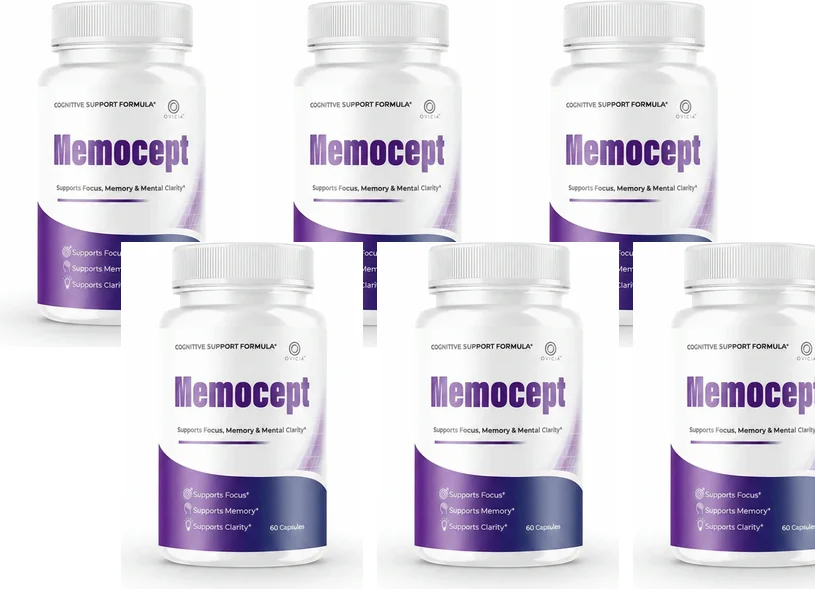
See how Memocept lists its ingredients
None of the branded ingredients above are in the formula. Memocept names five actives — Bacopa monnieri, Huperzine-A, Rhodiola rosea, L-Tyrosine and caffeine from green coffee — with the evidence for each set out plainly.
Order Now